
FORCE Computers
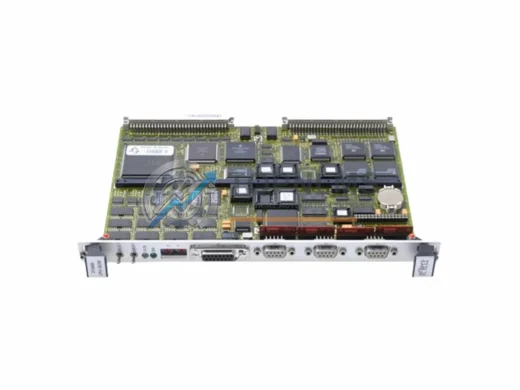
FORCE CPU-30ZBE Ruggedized VMEbus SBC for Harsh Environments
CPU-30ZBEFORCE CPU-30ZBE ruggedized VMEbus 6U SBC for harsh industrial environments. 12-month warranty, tested stock, fast global shipping. Contact TOPNLMS.
Request availability, condition, lead time and export shipping details for SYS68K/CPU-6 REV. 4.1.
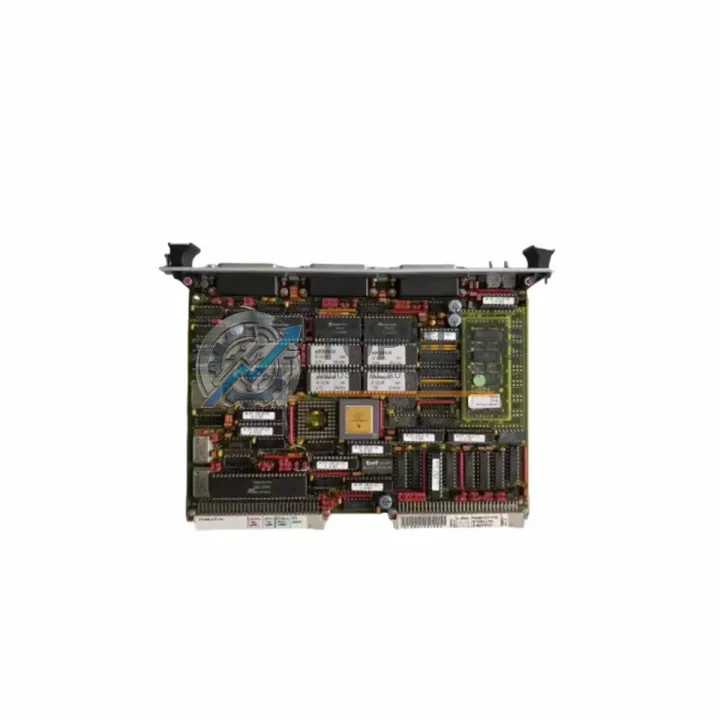
Send this exact part number, quantity and destination country. TOPNLMS will confirm availability, condition and export lead time before quotation.
When your FORCE COMPUTERS SYS68K/CPU-6 REV.4.1 VMEbus single-board computer reaches end-of-life or fails unexpectedly, the impact on your production line can be immediate and costly. This replacement and upgrade solution is engineered specifically for engineers and procurement teams managing legacy VMEbus-based control architectures — delivering a verified, drop-in compatible SBC that minimizes engineering rework, reduces commissioning time, and restores system availability with confidence.
The SYS68K/CPU-6 REV.4.1 is a Motorola 68020-based single-board computer from FORCE COMPUTERS’ SYS68K series, widely deployed in VMEbus chassis across industrial automation, defense electronics, scientific instrumentation, and process control systems throughout the 1990s and early 2000s. As original units become increasingly scarce and FORCE COMPUTERS has long since ceased production, sourcing a verified replacement has become a critical procurement challenge. Our stock of SYS68K/CPU-6 REV.4.1 boards is fully tested, inspected, and shipped with a 12-month warranty — providing the assurance your maintenance team needs before committing to a costly system redesign.
For facilities still operating VMEbus racks populated with companion modules such as the SYS68K/ISIO-1 serial I/O board, SYS68K/ISCSI-1 SCSI interface, or SYS68K/IPIC-1 interrupt controller, this replacement CPU board slots directly into the existing 6U VMEbus backplane without requiring chassis modification. The board’s P1 and P2 connector pinout, bus arbitration logic, and interrupt handling are fully compatible with the original SYS68K series backplane specification, meaning your existing I/O modules, memory boards, and communication cards continue to operate without re-addressing or re-cabling.
Migration from a failed or degraded SYS68K/CPU-6 to this replacement unit typically involves three steps: physical board swap into the VMEbus slot, restoration of the boot EPROM or SCSI-attached OS image, and verification of the system monitor (FCCPU-6 ROM) initialization sequence. Engineers familiar with the FORCE COMPUTERS SYS68K/CPU-6A or SYS68K/CPU-6B variants will find the REV.4.1 board’s jumper configuration and memory map largely consistent, reducing the learning curve for field technicians. If your system previously relied on a SYS68K/MFIO-1 multi-function I/O module for analog signal conditioning or a SYS68K/LANCE Ethernet interface for network connectivity, these companion cards remain fully interoperable with the replacement CPU board.
For sites considering a broader control system modernization — transitioning from a VMEbus architecture to a contemporary PLC or DCS platform — this replacement board also serves as a stable bridge solution. It allows production to continue uninterrupted while your engineering team plans the migration to a modern controller such as a Siemens SIMATIC S7-300 rack system, a Rockwell Automation ControlLogix chassis, or an ABB AC500 modular PLC. During the transition period, the SYS68K/CPU-6 REV.4.1 maintains full compatibility with existing field wiring, terminal blocks, and signal conditioning hardware, avoiding the need for a simultaneous I/O infrastructure overhaul.
Communication protocol compatibility is a frequent concern during VMEbus system upgrades. The SYS68K/CPU-6 REV.4.1 supports standard VMEbus data transfer protocols (D08, D16, D32) and is compatible with VMEbus system controllers operating under the VME64 specification. If your system includes a SYS68K/VMELAN VMEbus LAN adapter or a third-party VMEbus-to-Ethernet bridge module, the replacement CPU board’s bus interface logic is fully compliant with the VMEbus IEEE 1014-1987 standard, ensuring uninterrupted network-connected operation.
Physical installation is straightforward: the board occupies a single 6U VMEbus slot, draws power from the standard ±5V/±12V VMEbus power supply rails, and requires no additional mounting hardware beyond the standard front-panel ejector levers. For systems housed in FORCE COMPUTERS SYS68K/CHA-6 or compatible third-party 6U VMEbus enclosures, the board’s front-panel dimensions and card-edge connector spacing conform to the IEC 60297-3 mechanical standard, ensuring a secure fit without chassis modification.
Procurement teams will appreciate that each unit ships from our Xiamen warehouse within 1–3 business days of order confirmation, with DHL Express, FedEx International Priority, and UPS Worldwide Expedited available as shipping options. Export documentation, including commercial invoice, packing list, and certificate of origin (Germany), is prepared for each shipment to facilitate customs clearance in the EU, North America, Southeast Asia, and the Middle East. All units are individually packed in anti-static shielding bags with foam-lined outer cartons to prevent transit damage.
| Parameter | Original SYS68K/CPU-6 REV.4.1 | This Replacement Unit |
|---|---|---|
| CPU | Motorola 68020 @ 16/20 MHz | Motorola 68020 @ 16/20 MHz (OEM-equivalent) |
| Bus Standard | VMEbus IEEE 1014-1987 | VMEbus IEEE 1014-1987 (fully compliant) |
| Board Format | 6U VMEbus, single slot | 6U VMEbus, single slot |
| Connector | P1 + P2 (96-pin DIN 41612) | P1 + P2 (96-pin DIN 41612) — direct fit |
| Data Transfer | D08, D16, D32 | D08, D16, D32 — compatible |
| Power Supply | +5V, ±12V from VMEbus backplane | +5V, ±12V from VMEbus backplane |
| OS / Boot | FCCPU-6 ROM monitor, SCSI/EPROM boot | Compatible with original ROM images |
| Companion Module Compatibility | SYS68K series I/O, memory, comms boards | Full SYS68K series backplane compatibility |
| Physical Dimensions | IEC 60297-3 6U standard | IEC 60297-3 6U standard — chassis-fit verified |
| Replacement Recommendation | — | Direct drop-in; no chassis or wiring changes required |
| Warranty | OEM warranty expired (discontinued) | 12-Month Warranty from TOPNLMS |
A successful VMEbus system migration rarely involves the CPU board alone. During the upgrade or replacement process for the SYS68K/CPU-6 REV.4.1, engineers commonly need to address the condition and availability of companion modules within the same chassis. The SYS68K/ISIO-1 serial I/O board, which provides RS-232/RS-422 communication ports for HMI panels and barcode readers, is frequently evaluated alongside the CPU replacement — and our inventory includes verified units of this module as well. Similarly, the SYS68K/ISCSI-1 SCSI interface board, used to connect to legacy hard drives or tape backup units, is available for sites that need to maintain the original storage architecture during the transition period.
For facilities upgrading their network connectivity, the SYS68K/LANCE Ethernet adapter remains a practical interim solution, allowing the VMEbus system to continue communicating with SCADA servers or historian databases while the broader migration to a modern Ethernet-native PLC platform is planned. If the migration path leads toward a Siemens S7 environment, PROFIBUS DP communication modules and CP 343-1 Ethernet processors are available to bridge the legacy VMEbus data into the new control network without requiring a full field-wiring overhaul.
Power supply integrity is another critical factor in VMEbus system reliability. If the existing VMEbus chassis power supply — whether a FORCE COMPUTERS SYS68K/PS-1 or a compatible third-party unit — shows signs of aging (capacitor bulge, output voltage drift, or fan failure), replacing it concurrently with the CPU board eliminates a common root cause of intermittent system faults. Signal isolation between the VMEbus backplane and field I/O terminals is equally important; DIN-rail-mounted signal isolators and terminal multiplier modules are available to protect the replacement CPU board from ground loops and transient voltages originating in the field wiring cabinet.
For sites where the SYS68K/CPU-6 REV.4.1 interfaces with a legacy operator panel or industrial CRT display, a modern replacement HMI — such as a Siemens SIMATIC HMI KTP700 Basic or a Weintek cMT series panel — can be integrated during the same maintenance window, using the existing serial communication wiring with a simple protocol converter. This approach avoids the need to re-run field cables while delivering a contemporary touchscreen interface to the operator.
Q: Can I swap the SYS68K/CPU-6 REV.4.1 without modifying the VMEbus backplane?
A: Yes. The replacement board uses the same 6U VMEbus form factor and P1/P2 connector pinout as the original. No backplane modification, re-termination, or slot reassignment is required.
Q: Will my existing application software run on the replacement board?
A: If your application is stored on EPROM or a SCSI-attached storage device and was compiled for the Motorola 68020 instruction set, it will execute on the replacement board without recompilation. Verify that the FCCPU-6 ROM monitor version on the replacement board matches or is compatible with your boot sequence requirements.
Q: Are there communication protocol differences between REV.4.1 and earlier revisions?
A: The VMEbus data transfer protocol (D08/D16/D32) and bus arbitration behavior are consistent across SYS68K/CPU-6 revisions. Minor differences in the on-board serial port configuration (baud rate defaults, handshaking) may require jumper adjustment — refer to the FORCE COMPUTERS SYS68K/CPU-6 hardware reference manual for revision-specific jumper tables.
Q: What if my chassis has limited physical space for board removal?
A: The SYS68K/CPU-6 REV.4.1 occupies a single 6U VMEbus slot. Standard VMEbus ejector levers allow board removal and insertion without disturbing adjacent modules. Ensure the chassis power supply is de-energized before performing the swap.
Q: Can this board replace a SYS68K/CPU-6A or CPU-6B variant?
A: The REV.4.1 board shares the same base architecture as the CPU-6A and CPU-6B variants. Functional compatibility is high, but verify the memory map configuration and interrupt vector assignments against your application’s requirements before committing to the swap in a production environment.
Q: How do I verify the board is functioning correctly after installation?
A: Power on the chassis and observe the FCCPU-6 ROM monitor initialization output on the console serial port (typically 9600 baud, 8N1). A successful boot sequence will display the monitor prompt and enumerate detected VMEbus modules. Run the built-in memory test and I/O loopback diagnostics before restoring the application software.
Every FORCE COMPUTERS SYS68K/CPU-6 REV.4.1 unit supplied by TOPNLMS is covered by a 12-month warranty from the date of shipment. Prior to dispatch, each board undergoes a multi-stage inspection process: visual examination for physical damage, power-on self-test (POST) verification, VMEbus interface continuity check, and functional validation of on-board memory and serial communication ports. Units that do not pass all inspection stages are quarantined and not offered for sale.
In the event of a warranty claim, TOPNLMS provides a replacement unit or full refund within the warranty period. Our after-sales response team is reachable at [email protected] and by phone at +86 18359293191, with a target response time of one business day. Replacement units are dispatched from our Xiamen warehouse using the same expedited shipping service as the original order, minimizing additional downtime exposure.
For procurement teams requiring documentation, we provide a test report, certificate of conformity, and commercial invoice with each shipment. Extended warranty options and consignment stock arrangements for high-volume or critical-infrastructure customers are available upon request.
FORCE CPU-30ZBE ruggedized VMEbus 6U SBC for harsh industrial environments. 12-month warranty, tested stock, fast global shipping. Contact TOPNLMS.
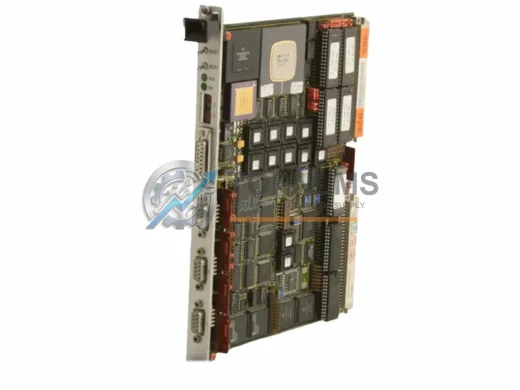
Original FORCE SYS68K/CPU-30ZBE VMEbus Single Board Computer. SYS68K series industrial spare for legacy automation systems. 12-month warranty. Fast shipping.
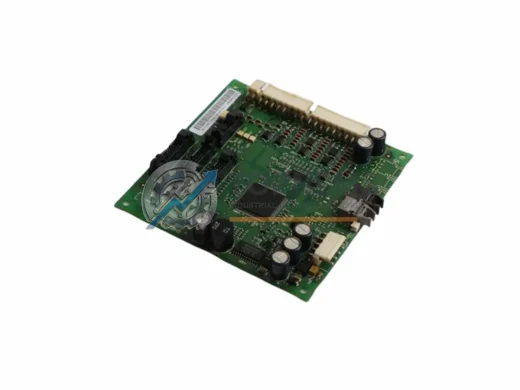
FORCE SPARC ESP5S-85/0-S VMEbus embedded CPU replacement. Compatible upgrade for ESP5S series. 12-month warranty. Fast global shipping from stock.
Original FORCE SYS68K/CPU-30BE-16 VMEbus SBC, 68030 @ 16MHz. Industrial replacement spare for SYS68K series. 12-month warranty, tested before shipment.
Click Quote This Model and the Part Number field will auto-fill with SYS68K/CPU-6 REV. 4.1.