
EPRO
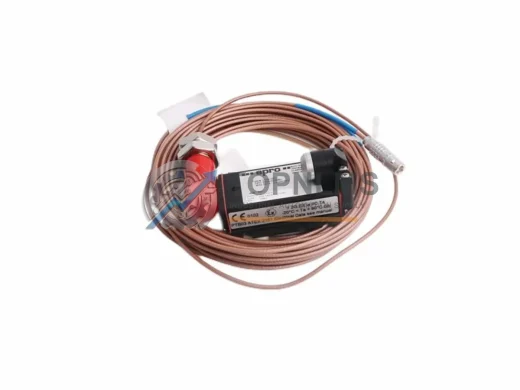
EPRO PR6424/010-040 CON021 Ruggedized Proximity Sensor
PR6424/010-040 CON021EPRO PR6424/010-040 CON021 eddy current proximity sensor. Certified for harsh industrial environments. In stock, tested, 12-month warranty. Fast global shipping.
Request availability, condition, lead time and export shipping details for PR9268/203-000.
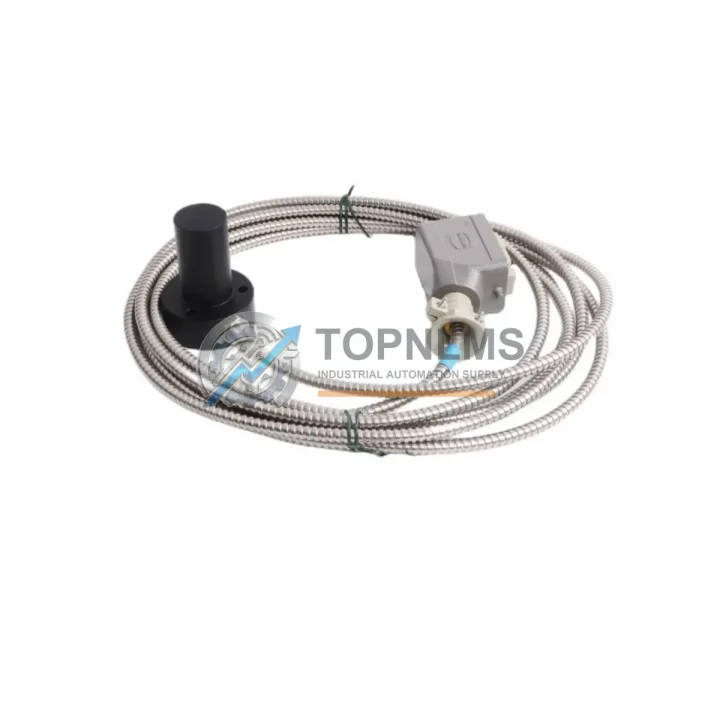
Send this exact part number, quantity and destination country. TOPNLMS will confirm availability, condition and export lead time before quotation.
The EPRO PR9268/203-000 is an original eddy-current proximity probe from the PR9268 Series, engineered for continuous shaft vibration, axial displacement, and radial position monitoring in rotating machinery. Deployed across turbines, compressors, pumps, and generators in heavy industrial environments, this probe is a critical front-line sensor in any predictive maintenance and condition monitoring strategy. Sourced directly from verified supply channels, every unit at TOPNLMS is tested prior to dispatch and backed by a 12-month warranty.
When a PR9268/203-000 probe fails or drifts out of calibration, the consequences extend far beyond a single sensor replacement. Vibration data loss can mask developing bearing faults, rotor imbalance, or misalignment — conditions that, left undetected, escalate into unplanned shutdowns and costly mechanical damage. Maintaining a certified spare on-site is not optional for facilities operating critical rotating assets; it is a fundamental element of operational resilience.
| Part Number | PR9268/203-000 |
| Brand / Manufacturer | EPRO (Emerson / Metso Automation) |
| Series | PR9268 |
| Product Type | Eddy-Current Proximity Probe |
| Measurement Principle | Eddy-current (non-contact) |
| Probe Length | 203 mm (8 in) |
| Cable Length | Integrated extension cable (system-matched) |
| Sensitivity | 7.87 V/mm (200 mV/mil) nominal |
| Linear Range | 0–2 mm (0–80 mil) typical |
| Operating Temperature | −40 °C to +120 °C |
| Target Material | Steel / Stainless Steel (AISI 4140 reference) |
| Connector Type | Coaxial, system-matched to PR9268 driver/conditioner |
| Compatibility | EPRO PR9268 Series drivers, CON021, MMS6000, MMS3000 monitoring systems |
| Country of Origin | Germany |
| Certification | CE; suitable for use in industrial hazardous-area monitoring systems |
| Warranty | 12 Months — tested before dispatch |
| Application | Shaft vibration, axial displacement, radial position monitoring |
| Typical Industries | Power generation, oil & gas, petrochemical, pulp & paper, steel |
A proximity probe replacement is rarely an isolated event. When a PR9268/203-000 is removed for inspection or replacement during a planned outage, maintenance engineers should treat the intervention as an opportunity to audit the entire vibration monitoring loop and the surrounding control cabinet. The probe operates as part of a signal chain — any weak link degrades measurement accuracy and can trigger nuisance trips or, worse, mask genuine faults.
Begin with the PR9268 extension cable connecting the probe to its driver. Extension cables are subject to mechanical fatigue, connector corrosion, and insulation degradation in high-temperature or high-vibration zones. A cable that tests marginally acceptable today may fail within weeks of a probe replacement, negating the maintenance investment. Inspect and replace extension cables on the same maintenance cycle as the probe itself.
Next, verify the condition of the PR9268 driver/conditioner module (such as the CON021 or equivalent EPRO driver). The driver converts the probe’s impedance signal into a calibrated DC voltage output; a drifting driver introduces systematic measurement error that is difficult to distinguish from a mechanical fault. If the driver has not been bench-tested within the last 12 months, scheduling a calibration check alongside the probe swap is best practice.
Within the monitoring rack, inspect the MMS6000 or MMS3000 series vibration monitoring modules that receive the conditioned signal. Check terminal connections for oxidation, verify that alarm and trip setpoints are correctly configured, and confirm that the module firmware is current. While the rack is open, it is also prudent to inspect adjacent I/O modules and relay output modules for signs of thermal stress or contact wear — these components share the same power bus and environmental conditions as the vibration monitoring cards.
Power quality is a frequently overlooked contributor to sensor drift. Inspect the 24 VDC power supply module feeding the monitoring system. Ripple or voltage sag on the supply rail can introduce noise into proximity probe outputs, producing false vibration readings. A spare power supply module should be part of any critical monitoring system’s on-site inventory.
For facilities running integrated machinery protection systems, also review the status of speed sensors and keyphasor probes installed on the same shaft. Keyphasor signals are used for phase-referenced vibration analysis; a degraded keyphasor probe will compromise the diagnostic value of the PR9268/203-000 vibration data even if the proximity probe itself is functioning correctly.
Finally, check the terminal blocks and DIN rail mounting hardware within the control cabinet. Loose terminal connections are a leading cause of intermittent signal faults that are misdiagnosed as sensor failures. Torque-check all signal and power terminals in the vibration monitoring loop as part of the probe replacement procedure.
The PR9268/203-000 is a long-established component in the EPRO proximity probe ecosystem, and many facilities are operating aging monitoring systems where original spare parts are increasingly difficult to source through standard distribution channels. TOPNLMS specialises in verified original and compatible spares for exactly this scenario — supporting facilities that need to extend the service life of installed MMS3000, MMS6000, and legacy EPRO monitoring systems without undertaking a full system upgrade.
Replacing a PR9268/203-000 with a verified original unit preserves the factory calibration curve and eliminates the need for system reconfiguration. This is particularly important in API 670-compliant installations where sensor substitution requires documented validation. Using an original replacement avoids the engineering overhead of sensitivity re-mapping and alarm setpoint recalculation that would be required if a non-equivalent probe were installed.
For facilities managing multiple rotating assets, a strategic approach to spare parts inventory — holding one or two PR9268/203-000 units per critical machine train — significantly reduces mean time to repair (MTTR) when a probe fault is identified during a routine vibration survey or following a trip event. The cost of a planned spare is a fraction of the production loss associated with an extended unplanned outage while awaiting parts procurement.
TOPNLMS ships globally with full export documentation. Each unit is individually tested for electrical continuity, insulation integrity, and sensitivity output before dispatch. Units are packaged to OEM standards to prevent transit damage to the probe tip and connector — the two most vulnerable points on any proximity probe.
Q1: Is the PR9268/203-000 compatible with my existing EPRO monitoring system?
The PR9268/203-000 is designed for use with EPRO PR9268 Series drivers and conditioners, including the CON021, and is compatible with MMS6000 and MMS3000 series monitoring racks. If you are integrating into a third-party monitoring system, confirm the required sensitivity (7.87 V/mm) and linear range match your system’s input specification before ordering. Contact us with your system details for compatibility confirmation.
Q2: What is the warranty coverage and what does pre-shipment testing include?
Every PR9268/203-000 unit supplied by TOPNLMS carries a 12-month warranty from the date of dispatch. Pre-shipment testing covers electrical continuity, coaxial connector integrity, insulation resistance, and sensitivity output verification against the PR9268 Series specification. A test report is available upon request for quality-critical applications.
Q3: How should I manage spare parts inventory for proximity probes in a critical rotating machinery application?
For API 670-compliant or safety-critical applications, industry best practice recommends holding a minimum of one spare probe per monitored measurement point on critical machine trains, with a higher buffer for machines where probe access requires significant disassembly. Probes should be stored in their original packaging in a dry, temperature-controlled environment and inspected annually. TOPNLMS can support bulk procurement for planned maintenance shutdowns with lead-time commitments.
Q4: Can I replace the PR9268/203-000 myself, or does it require specialist commissioning?
Physical replacement of the probe is a straightforward mechanical procedure for trained maintenance personnel familiar with proximity probe installations. However, following replacement, the gap voltage (static clearance) must be set correctly using the driver output and a calibrated gap tool or oscilloscope, and the measurement loop should be verified against the system’s baseline vibration readings before returning the machine to service. For facilities without in-house vibration instrumentation expertise, TOPNLMS can provide technical guidance documentation upon request.
EPRO PR6424/010-040 CON021 eddy current proximity sensor. Certified for harsh industrial environments. In stock, tested, 12-month warranty. Fast global shipping.
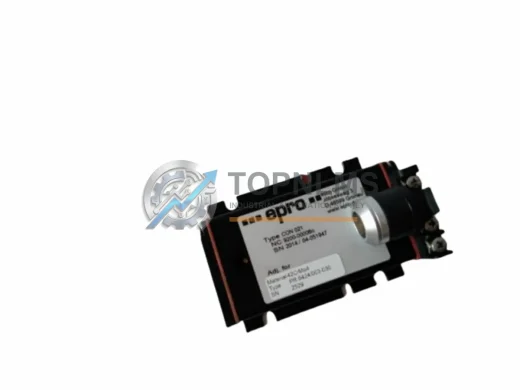
EPRO PR6424/000-030-CN CON021 dual-channel eddy current vibration monitor. Drop-in MMS 6000 replacement & upgrade. 12-month warranty. Ships from Xiamen.
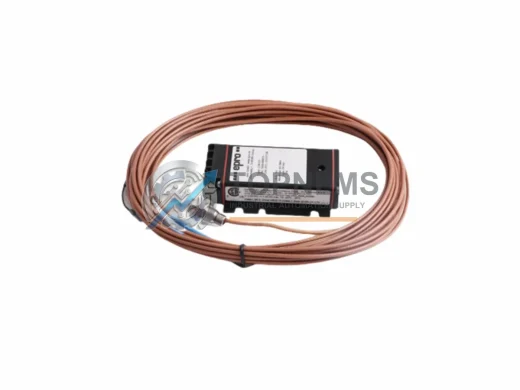
EPRO PR6423/015-000-CN CON021 ruggedized eddy current proximity sensor. MMS 6000 series. In stock, tested, 12-month warranty. Fast global shipping from TOPNLMS.
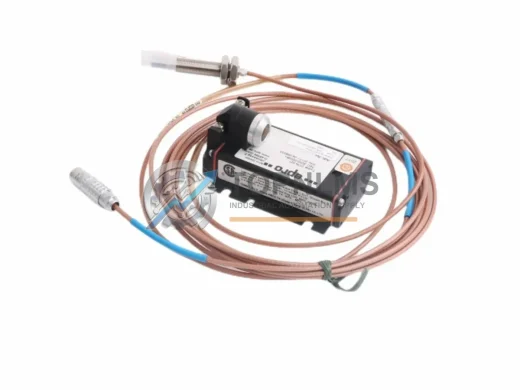
EPRO PR6423/014-040 CON021 eddy current proximity sensor for harsh industrial environments. 12-month warranty, tested stock, fast shipping. Buy at TOPNLMS.
Click Quote This Model and the Part Number field will auto-fill with PR9268/203-000.