
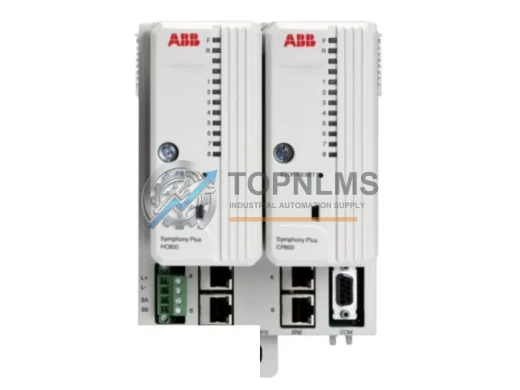
ABB
ABB CPM810 Original Industrial Spare AC800M Compatible
CPM810ABB CPM810 original industrial spare for AC800M DCS systems. Fast replacement, 12-month warranty, tested before shipment. Reduce downtime — order now.
Request availability, condition, lead time and export shipping details for SPCC1-7.
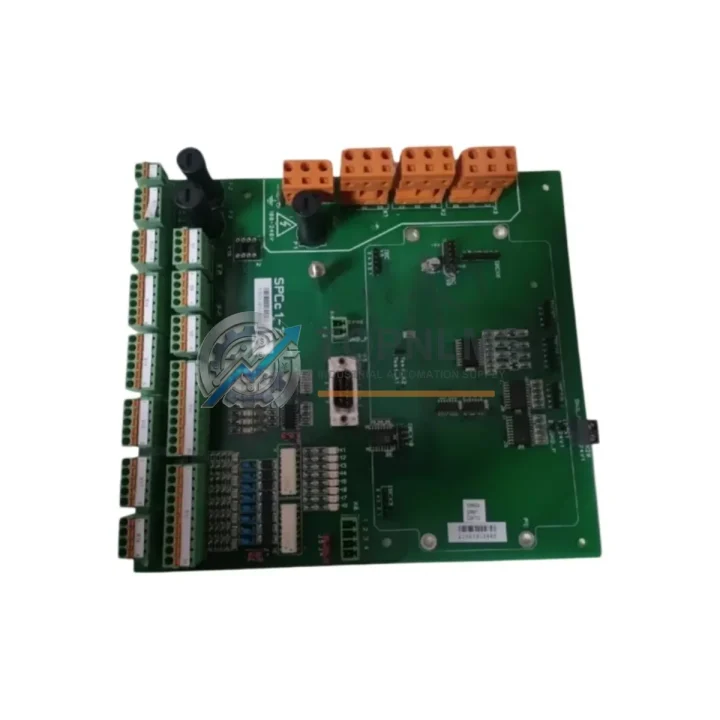
Send this exact part number, quantity and destination country. TOPNLMS will confirm availability, condition and export lead time before quotation.
The EMG SPCC1-7 is a precision signal conditioning module within the SPCC Series platform, designed for demanding industrial process control environments where analog signal integrity, loop stability, and long-term reliability are non-negotiable. As legacy DCS and PLC architectures age out of vendor support cycles, facilities running older EMG SPCC-family controllers face increasing pressure to source verified replacement units or execute a structured upgrade path that preserves existing wiring infrastructure, cabinet space, and control logic.
TOPNLMS maintains verified stock of the EMG SPCC1-7 and related SPCC Series modules, sourced through established industrial distribution channels and subject to incoming inspection before dispatch. Each unit is tested for signal output accuracy, power rail stability, and communication integrity prior to shipment from our Xiamen facility. Whether you need a direct drop-in replacement to restore a tripped control loop or are planning a phased migration away from an end-of-life process controller platform, the SPCC1-7 provides a technically sound and commercially viable solution.
For facilities operating mixed-generation control architectures — where a Siemens S7-300 or S7-400 rack may coexist with legacy EMG signal conditioning hardware — the SPCC1-7’s analog I/O interface and DIN-rail mounting profile allow it to be integrated without structural modifications to the control cabinet. Engineers migrating from older EMG SPCC0 or SPCC2 variants will find that the SPCC1-7 retains backward-compatible terminal assignments for standard 4–20 mA loop wiring, significantly reducing rewiring labor during scheduled maintenance windows.
In distributed control system environments, the SPCC1-7 is frequently deployed alongside communication gateway modules and signal isolators to bridge legacy field instruments to modern PROFIBUS DP or HART-enabled controller backplanes. When replacing a failed unit in a running DCS segment, the module’s compact form factor and passive cooling design allow hot-swap preparation without requiring adjacent modules — such as EMG SPCC Series power supply modules or neighboring I/O cards — to be removed from the rack.
Facilities transitioning from older Yokogawa CENTUM or ABB Advant OCS architectures to modern distributed I/O platforms often retain EMG signal conditioning modules as an intermediate layer, preserving field wiring while upgrading the controller tier. In these hybrid configurations, the SPCC1-7 serves as a stable analog front-end, accepting thermocouple, RTD, or millivolt inputs and delivering conditioned 4–20 mA signals to the new controller’s analog input cards. This approach eliminates the need for full field rewiring and allows phased commissioning, loop by loop, without a full plant shutdown.
For OEM machine builders and system integrators managing retrofit projects, the SPCC1-7 is also compatible with Beckhoff EtherCAT I/O terminal systems when used with appropriate signal interface modules, and can be paired with Phoenix Contact or Weidmüller terminal blocks for structured wiring in compact control panels. Its wide supply voltage tolerance accommodates both 24 VDC and 115/230 VAC powered cabinet configurations, reducing the need for additional power conversion hardware during a retrofit.
| Parameter | Legacy / Replaced Model | EMG SPCC1-7 (Replacement) |
|---|---|---|
| Series | EMG SPCC0, SPCC2, SPCC3 (EOL) | EMG SPCC Series (SPCC1-7) |
| Signal Input | Thermocouple / RTD / mV (varies by model) | Universal: TC, RTD, mV, 4–20 mA |
| Signal Output | 4–20 mA analog (single channel) | 4–20 mA analog (isolated, single channel) |
| Mounting | DIN-rail (35 mm) | DIN-rail (35 mm) — direct fit |
| Supply Voltage | 24 VDC or 115/230 VAC (model-dependent) | Wide-range: 24 VDC / 115–230 VAC |
| Communication | Analog loop only (no fieldbus) | Analog loop; HART-transparent (passive) |
| Terminal Wiring | Screw terminals (legacy pitch) | Compatible screw terminal pitch — no rewiring required in most installations |
| Cabinet Space | Standard DIN module width | Same footprint — no panel modification needed |
| Replacement Recommendation | SPCC0 / SPCC2 / SPCC3 (discontinued) | Direct replacement; verify input type configuration before installation |
| Warranty | N/A (EOL — no vendor support) | 12-Month Warranty from TOPNLMS |
A successful SPCC1-7 installation rarely occurs in isolation. In practice, the replacement or upgrade of a signal conditioning module is part of a broader control system maintenance or modernization activity that touches multiple components within the same cabinet or control loop.
For facilities replacing multiple failed or aging SPCC Series units simultaneously, it is common to also address the EMG SPCC Series DIN-rail power supply module, which provides the 24 VDC bus feeding the signal conditioning tier. A degraded power supply is frequently the root cause of intermittent signal conditioning faults, and replacing it alongside the SPCC1-7 eliminates a common callback risk. Similarly, the EMG SPCC Series terminal adapter or base module — where applicable — should be inspected for contact oxidation before the new SPCC1-7 is seated.
In systems where the SPCC1-7 feeds a Siemens S7-300 analog input module (such as the SM 331 or SM 334), engineers should verify that the analog input card’s current input range is configured for 4–20 mA and that the load resistance is within the SPCC1-7’s specified output drive capability. For S7-400 or S7-1500 migrations, the same signal is typically routed through an ET 200M or ET 200SP distributed I/O station, where the SPCC1-7 output connects to a standard AI module without protocol conversion.
In PROFIBUS DP architectures, a PROFIBUS DP/PA coupler or segment coupler may be present between the controller backplane and the field instrument tier. The SPCC1-7’s analog output integrates cleanly into this architecture as a signal source on the 4–20 mA segment, without requiring any fieldbus configuration changes. For HART-enabled field instruments, the SPCC1-7’s HART-transparent output allows a handheld HART communicator or asset management system to communicate with the field device through the module without signal interruption.
Retrofit projects involving older Honeywell TDC 3000 or Fisher-Rosemount RS3 DCS platforms frequently require signal isolation between legacy field wiring and new controller I/O cards. In these cases, a signal isolator or loop-powered isolator module — such as those from the Phoenix Contact MACX or Pepperl+Fuchs KFD series — is installed in series with the SPCC1-7 output to provide galvanic isolation and protect the new controller’s analog input from ground loop interference. TOPNLMS can advise on compatible isolator selection based on your specific loop configuration.
For complete control cabinet retrofits, the SPCC1-7 is typically installed alongside updated Weidmüller or Phoenix Contact terminal blocks, a new 24 VDC SITOP or QUINT power supply, and — where HMI integration is required — a Siemens KTP700 or KTP900 Basic Panel connected to the controller via PROFINET. This combination delivers a modernized control front-end while preserving the existing field wiring investment.
Q: Can I replace my existing SPCC0 or SPCC2 with the SPCC1-7 without rewiring?
A: In most installations, yes. The SPCC1-7 uses the same DIN-rail mounting profile and compatible terminal pitch as earlier SPCC Series models. However, you should verify the input type configuration (TC type, RTD wiring, or mA input) matches your field instrument before powering the replacement unit. Input type is typically set via DIP switch or front-panel jumper on the SPCC1-7.
Q: What communication protocols does the SPCC1-7 support?
A: The SPCC1-7 is an analog signal conditioning module — its primary interface is a 4–20 mA current loop output. It does not natively support PROFIBUS, PROFINET, or EtherNet/IP. However, its output is HART-transparent, meaning a HART-capable field instrument connected to its input can still be accessed by a HART master on the output loop. For fieldbus integration, the 4–20 mA output is connected to the analog input of a fieldbus-capable I/O module or distributed I/O station.
Q: Will the SPCC1-7 fit in my existing control cabinet without panel modifications?
A: Yes. The SPCC1-7 mounts on standard 35 mm DIN rail and occupies the same width as legacy SPCC Series modules. No panel cutouts, additional mounting hardware, or cabinet modifications are required for a direct replacement.
Q: Do I need to modify my PLC or DCS program when replacing the SPCC1-7?
A: No program changes are required for a direct replacement of a failed SPCC Series unit with the SPCC1-7, provided the input type and output range are configured identically. The controller sees the same 4–20 mA signal on its analog input channel. If you are changing the input sensor type (e.g., from Type K thermocouple to PT100 RTD), you will need to update the scaling parameters in your controller’s analog input configuration.
Q: How do I verify the SPCC1-7 is functioning correctly after installation?
A: After installation, apply power and verify the output current with a calibrated loop calibrator or multimeter in series with the output loop. Compare the measured output against the expected value for your process input signal. Most SPCC Series modules include a front-panel LED for power and fault indication. If the output deviates from the expected value, check input wiring polarity, supply voltage, and input type configuration.
Q: What is the lead time and shipping arrangement?
A: TOPNLMS maintains stock of the EMG SPCC1-7 in Xiamen. Orders are typically dispatched within 1–3 business days of payment confirmation. International shipments are available via DHL Express, FedEx International Priority, or sea freight for bulk orders. A packing list and test report are included with each shipment.
Every EMG SPCC1-7 unit supplied by TOPNLMS is covered by a 12-month warranty from the date of shipment. This warranty covers manufacturing defects, component failures under normal operating conditions, and signal accuracy deviations outside the published specification. It does not cover damage resulting from incorrect installation, overvoltage, reverse polarity, or physical impact.
Prior to dispatch, each SPCC1-7 unit undergoes a pre-shipment inspection that includes visual inspection for physical damage, power-on functional verification, and output signal accuracy check against a calibrated reference. Units that do not pass inspection are quarantined and not shipped. A test record is available upon request for quality-critical applications.
In the event of a warranty claim, TOPNLMS will arrange for the defective unit to be returned to our Xiamen facility for evaluation. Upon confirmation of a warranty-covered defect, a replacement unit will be dispatched within 5 business days at no additional cost. For time-critical applications where downtime cannot be tolerated, we recommend purchasing a spare unit alongside your primary order to maintain on-site backup inventory.
Our after-sales team is reachable via email and phone for technical support during the warranty period. We can assist with installation verification, signal calibration guidance, and compatibility questions for your specific control system architecture. Response time for technical inquiries is typically within 1 business day.
TOPNLMS is committed to supporting industrial facilities through the full lifecycle of their control system assets — from initial procurement through replacement, retrofit, and long-term spare parts management. We maintain relationships with multiple EMG distribution channels to ensure continuity of supply for SPCC Series components, even as individual models reach end-of-life status with the original manufacturer.
ABB CPM810 original industrial spare for AC800M DCS systems. Fast replacement, 12-month warranty, tested before shipment. Reduce downtime — order now.
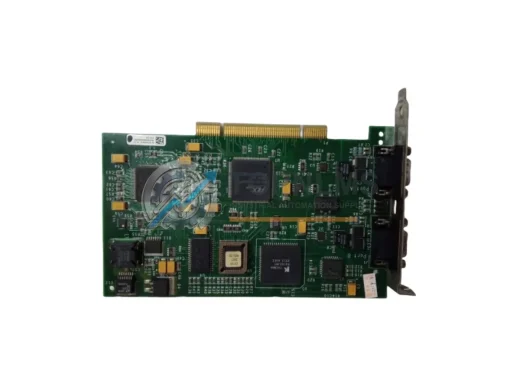
Schneider Electric 416NHM30032A Modicon Quantum PLC memory card. Rugged, reliable industrial automation component. In stock, tested, 12-month warranty. Fast shipping.
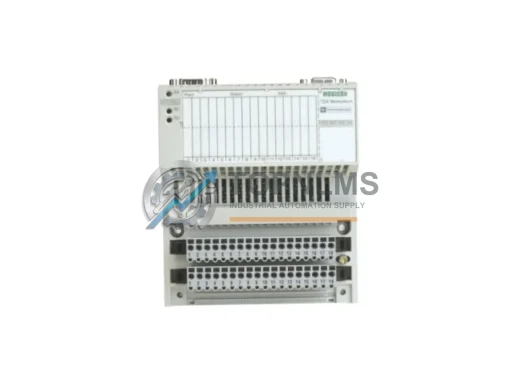
Schneider Electric 170INT11000 original Modicon Momentum Interbus communication adapter. Industrial replacement, 12-month warranty, fast shipping. topnlms.com
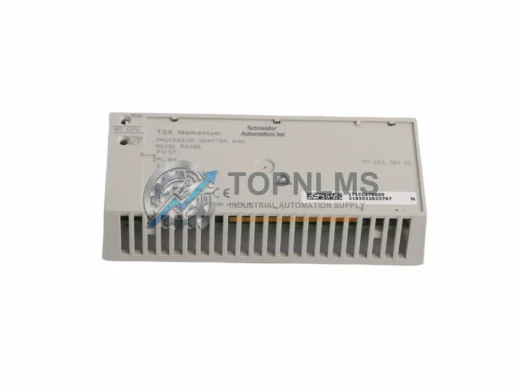
Original Schneider Electric 171CCS78000 Modicon Quantum PLC Processor Adaptor. Industrial spare for system replacement. 12-month warranty. Fast worldwide shipping.
Click Quote This Model and the Part Number field will auto-fill with SPCC1-7.