
Tokyo Electron
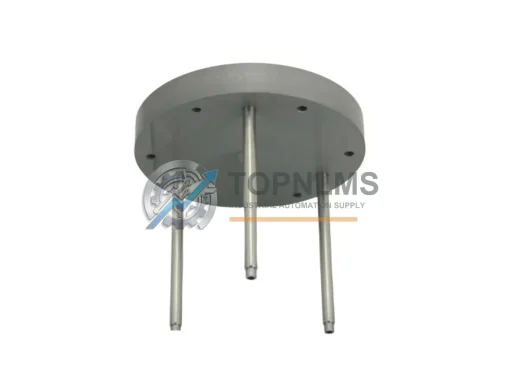
Tokyo Electron TF906276-001 Pin Base Assembly for TEL Trias
TF906276-001TF906276-001 replacement & upgrade for TEL Trias TMH-064 PM Chamber. Compatible with 414713-001, 0010-33417. 480×190mm. 12-month warranty. Fast global ship.
Request availability, condition, lead time and export shipping details for PT-1DA.
Send this exact part number, quantity and destination country. TOPNLMS will confirm availability, condition and export lead time before quotation.
When your existing vacuum measurement infrastructure relies on aging or discontinued Pirani gauge controllers, unplanned downtime is not an option. The DIAVAC LIMITED PT-1DA Pirani Vacuum Gauge Controller is a proven, field-tested replacement and upgrade solution for facilities operating legacy PT Series vacuum instrumentation. Whether you are migrating from an earlier PT-1 or PT-1B controller, retrofitting a vacuum furnace control cabinet, or consolidating spare parts inventory for a multi-chamber CVD or PVD system, the PT-1DA delivers the measurement accuracy, signal compatibility, and physical form factor required for a smooth, low-risk transition.
The PT-1DA operates across a measurement range of 1×10⁻² to 1×10⁵ Pa, making it suitable for rough-to-medium vacuum applications commonly found in semiconductor processing, thin-film deposition, heat treatment, and industrial leak testing environments. Its analog output (0–10 V DC, logarithmic) is directly compatible with most legacy PLC analog input modules and DCS analog input cards, eliminating the need for signal conditioning hardware during migration. Engineers replacing a PT-1B or PT-1 unit will find that the PT-1DA shares the same Pirani sensor connector pinout and panel cutout dimensions, allowing a direct swap without cabinet rework.
For facilities running Siemens S7-300 or S7-400 series PLCs with SM 331 analog input modules, the PT-1DA’s 0–10 V output maps directly to the existing channel configuration, requiring only a minor scaling adjustment in the STEP 7 or TIA Portal program. Similarly, installations using Yokogawa CENTUM VP DCS with NFAI141 analog input cards, or Honeywell Experion PKS with C300 controllers, can integrate the PT-1DA output without hardware modification. The controller’s relay outputs (two independent set-point relays, SPDT, 250 V AC / 3 A) are compatible with standard interlock wiring schemes used in vacuum system safety circuits, preserving existing ladder logic and function block diagrams.
Physical installation is straightforward. The PT-1DA mounts in a standard 1/8 DIN panel cutout (96 mm × 48 mm), identical to the PT-1 and PT-1B footprint. Power supply requirements are 100–240 V AC, 50/60 Hz, universal input — no transformer or power conditioning is needed when replacing units in existing control cabinets. The front-panel display provides a four-digit LED readout in Pa, Torr, or mbar, selectable via the front keypad, which simplifies commissioning and operator familiarization during the transition period.
Communication and data logging requirements are addressed by the PT-1DA’s built-in RS-232C serial interface, supporting DIAVAC’s standard ASCII command protocol. For facilities that previously used the PT-1B with a dedicated RS-232 data logger or SCADA gateway, the PT-1DA is fully backward compatible at the protocol level, allowing existing communication drivers and HMI tag configurations to remain unchanged. If your system architecture requires RS-485 multi-drop communication — for example, when connecting multiple vacuum gauges to a single Mitsubishi MELSEC iQ-R series CPU module via a QJ71C24N serial communication module — an optional RS-232C to RS-485 converter can be added without modifying the PT-1DA firmware.
| Parameter | Legacy PT-1 / PT-1B | DIAVAC LIMITED PT-1DA | Replacement Notes |
|---|---|---|---|
| Measurement Range | 1×10⁻² – 1×10⁵ Pa | 1×10⁻² – 1×10⁵ Pa | Identical range; no recalibration required |
| Analog Output | 0–10 V DC (log) | 0–10 V DC (log) | Direct signal compatibility with existing PLC/DCS AI cards |
| Relay Outputs | 2× SPDT, 250 V AC / 3 A | 2× SPDT, 250 V AC / 3 A | Interlock wiring unchanged |
| Panel Cutout | 96 × 48 mm (1/8 DIN) | 96 × 48 mm (1/8 DIN) | Drop-in fit; no cabinet modification |
| Power Supply | 100–240 V AC universal | 100–240 V AC universal | No transformer change required |
| Sensor Connector | DIAVAC PT Series (5-pin) | DIAVAC PT Series (5-pin) | Existing sensor cable reused |
| Communication | RS-232C (ASCII protocol) | RS-232C (ASCII protocol) | Existing SCADA/HMI drivers compatible |
| Display | 4-digit LED (Pa/Torr/mbar) | 4-digit LED (Pa/Torr/mbar) | Operator interface unchanged |
| Set-Point Configuration | Front keypad | Front keypad | Same operator procedure |
| Warranty | Varies (OEM) | 12 Months | Full replacement warranty from TOPNLMS |
A successful migration from a legacy vacuum control system to the PT-1DA rarely involves a single component. In practice, the upgrade process touches several interconnected subsystems within the control cabinet and the broader automation architecture. The following describes the typical scope of a PT Series migration project and the associated components that are commonly addressed alongside the PT-1DA replacement.
The Pirani sensor itself — typically a DIAVAC WP-16 or WP-02 Pirani gauge tube — is the first component to evaluate. If the existing sensor has accumulated significant operating hours or shows drift beyond the ±15% accuracy specification, replacing it in parallel with the PT-1DA controller ensures that the calibrated system accuracy is restored from day one. The PT-1DA is factory-calibrated with DIAVAC’s standard PT Series sensor, so a matched sensor-controller pair eliminates the need for field calibration after installation.
For control cabinets that house multiple vacuum measurement points — for example, a load-lock chamber, a process chamber, and a foreline — it is common to find a combination of PT-1DA units alongside DIAVAC DT-1000 or DT-600 thermocouple vacuum gauge controllers covering the roughing pump foreline. During a cabinet retrofit, standardizing on a single controller family simplifies spare parts management and reduces the number of unique communication drivers required in the SCADA system.
On the PLC side, facilities running Mitsubishi MELSEC Q series or iQ-R series systems will typically interface the PT-1DA analog output to a Q64AD or R60AD4 analog input module. The 0–10 V input range is a standard configuration for these modules, and the existing I/O parameter settings in GX Works2 or GX Works3 require only a scaling constant update to reflect the PT-1DA’s logarithmic pressure-to-voltage conversion table. For Allen-Bradley ControlLogix or CompactLogix systems using 1756-IF16 or 1769-IF4 analog input modules, the same principle applies — the PT-1DA output is within the module’s standard 0–10 V input range, and the existing Add-On Instruction (AOI) for pressure scaling can be updated with the new conversion coefficients without modifying the broader control program.
Power distribution within the control cabinet should also be reviewed during the migration. If the existing cabinet uses a Phoenix Contact QUINT or TRIO series 24 V DC power supply to power auxiliary instrumentation, the PT-1DA’s universal AC input means it draws directly from the cabinet’s AC distribution rail, independent of the 24 V DC bus. This simplifies the power architecture and reduces load on the DC supply. For cabinets with limited AC distribution capacity, a dedicated circuit breaker — such as a Schneider Electric iC60N or ABB S200 series — should be added for the PT-1DA to ensure proper overcurrent protection and isolation during maintenance.
Signal isolation is another consideration in older installations where ground loops or common-mode noise have historically caused measurement errors. Inserting a signal isolator — such as a Phoenix Contact MCR-SL-UI-UI or a Weidmüller WAS4 series analog isolator — between the PT-1DA analog output and the PLC analog input card eliminates ground loop interference without requiring changes to the PT-1DA configuration or the PLC program. This is particularly relevant in facilities where the vacuum system is physically remote from the control room and the cable run exceeds 20 meters.
Finally, for facilities that use an HMI — such as a Siemens SIMATIC TP700 Comfort or a Proface GP4000 series panel — to display vacuum status and set-point alarms, the migration to the PT-1DA requires updating the HMI tag database to reflect the new analog scaling and, if the RS-232C communication interface is used, verifying the COM port settings (9600 baud, 8N1) match the PT-1DA default configuration. In most cases, the HMI screen layouts and alarm pages require no modification, as the PT-1DA presents the same data structure as the PT-1B.
Q: Can I reuse the existing Pirani sensor cable when replacing a PT-1B with the PT-1DA?
A: Yes. The PT-1DA uses the same 5-pin DIAVAC PT Series sensor connector as the PT-1 and PT-1B. The existing sensor cable can be reused without modification, provided the cable insulation and connector contacts are in good condition.
Q: Do I need to modify my PLC program after replacing the PT-1B with the PT-1DA?
A: In most cases, only a scaling constant update is required. The PT-1DA’s analog output characteristic (0–10 V DC, logarithmic, Pa) is identical to the PT-1B. If your existing PLC program uses a lookup table or polynomial approximation for pressure conversion, verify that the coefficients match the PT-1DA’s published voltage-to-pressure table in the product manual.
Q: Is the PT-1DA compatible with the RS-232C communication driver I use for the PT-1B?
A: Yes. The PT-1DA implements the same DIAVAC ASCII command protocol as the PT-1B. Existing SCADA communication drivers, OPC server configurations, and HMI tag definitions do not require modification. Verify that the COM port settings (baud rate, data bits, parity, stop bits) match the PT-1DA defaults before going live.
Q: The existing control cabinet has limited depth. Will the PT-1DA fit?
A: The PT-1DA has a panel depth of approximately 120 mm behind the panel face, which is comparable to the PT-1B. Verify the available depth in your cabinet before installation. If depth is constrained, ensure that the rear connector and cable bend radius are accounted for in the available space.
Q: Can the PT-1DA relay outputs be used with the existing interlock wiring?
A: Yes. The PT-1DA provides two SPDT relay outputs rated at 250 V AC / 3 A, identical to the PT-1B specification. Existing interlock wiring, terminal block connections, and PLC digital input assignments do not require modification. Set-point values must be re-entered via the front keypad after installation.
Q: What is the recommended commissioning procedure after installation?
A: After physical installation and wiring verification, power on the PT-1DA and allow a 30-minute warm-up period before taking reference measurements. Verify the analog output voltage at atmospheric pressure (should read approximately 8.0 V for 1×10⁵ Pa) and at the lowest achievable vacuum in your system. Compare readings against a reference gauge if available. Re-enter set-point values and verify relay operation before returning the system to production.
Every DIAVAC LIMITED PT-1DA unit supplied by TOPNLMS is covered by a 12-month warranty from the date of shipment. Prior to dispatch, each unit undergoes a functional verification test covering analog output accuracy, relay set-point operation, display function, and RS-232C communication response. Units that do not meet DIAVAC’s published specifications are quarantined and not shipped.
In the event of a warranty claim, TOPNLMS provides a replacement unit dispatch within 3 business days of claim confirmation, subject to stock availability. Defective units are returned via prepaid logistics arranged by TOPNLMS. Warranty coverage includes manufacturing defects and functional failures under normal operating conditions. It does not cover damage resulting from incorrect installation, overvoltage, contamination, or unauthorized modification.
For urgent replacement requirements — for example, an unplanned shutdown where the vacuum system is critical to production continuity — TOPNLMS maintains buffer stock of PT-1DA units to support expedited shipment from Xiamen. Standard lead time for in-stock units is 3–5 business days to major industrial regions in Asia, Europe, and North America. Express air freight options are available upon request.
Procurement teams can request a formal quotation, proforma invoice, or certificate of conformance by contacting TOPNLMS directly. All units are shipped with original manufacturer documentation including the product manual, calibration record, and packing list.
TF906276-001 replacement & upgrade for TEL Trias TMH-064 PM Chamber. Compatible with 414713-001, 0010-33417. 480×190mm. 12-month warranty. Fast global ship.
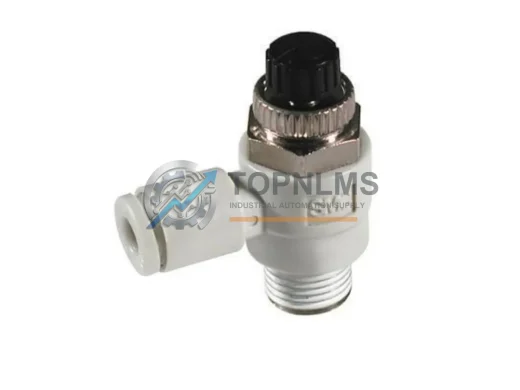
Semitool 900T0272-503 ruggedized chamber control block for HV-RP 810. In-stock, tested, 12-month warranty. Fast shipping. Contact topnlms.com.
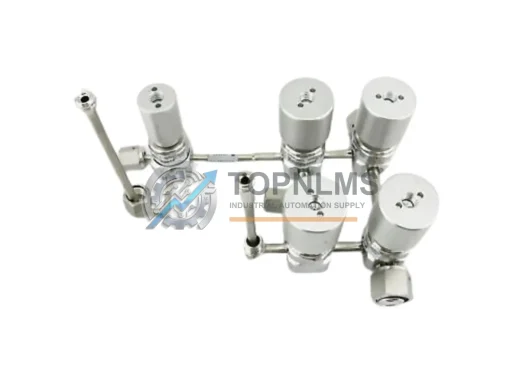
Original Swagelok 6LVV-P15961-DU-AA pneumatic valve assembly. 6LVV Series compatible, tested & ready to ship. 12-month warranty. Industrial replacement.
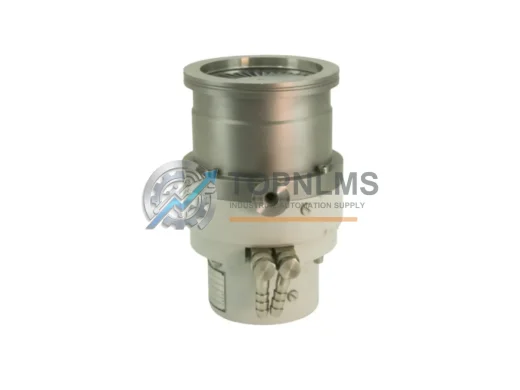
Original Pfeiffer Vacuum PM-P01-210NAH2964 TPH 170 turbomolecular pump spare. Compatible with PMC237 controller. Industrial replacement, 12-month warranty, worldwide shipping.
Click Quote This Model and the Part Number field will auto-fill with PT-1DA.