Product Overview
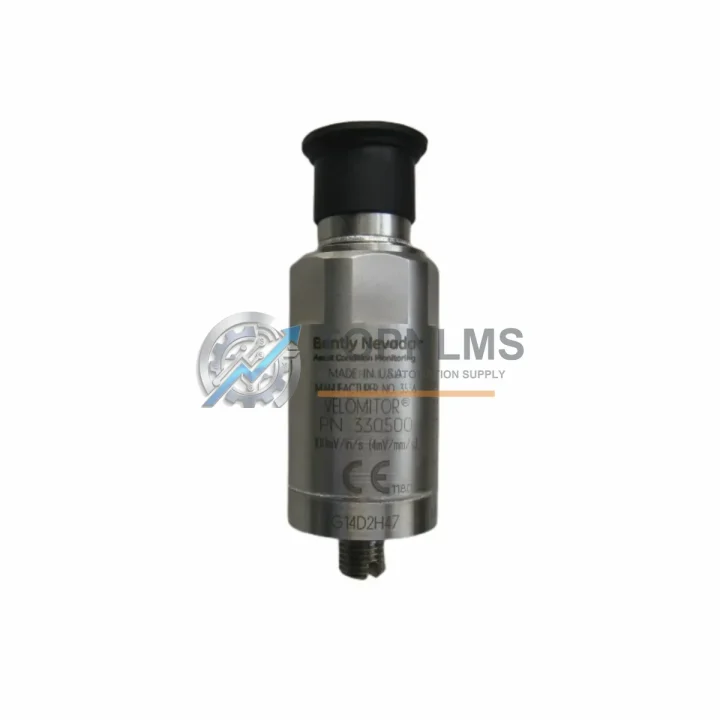
Bently Nevada 330500-02-04 Replacement for 330500 Series: Smooth Transition & Legacy System Compatibility
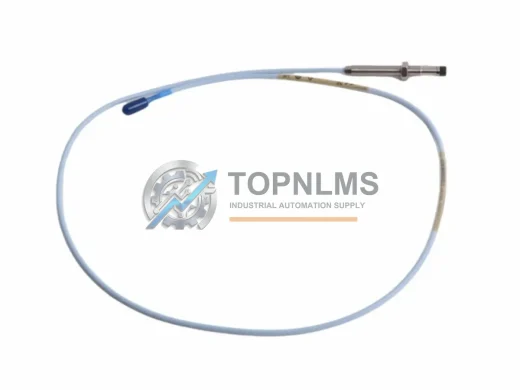
The Bently Nevada 330500-02-04 is a high-precision seismic velocity transducer engineered for continuous vibration monitoring in rotating machinery and critical industrial assets. As legacy condition monitoring systems age and OEM support for older 330500 Series configurations becomes increasingly limited, plant engineers and reliability teams face mounting pressure to source verified replacement units that preserve signal integrity, wiring compatibility, and system uptime without requiring a full platform overhaul.
TOPNLMS supplies the 330500-02-04 as a direct drop-in replacement for existing Bently Nevada 330500 Series installations. Whether you are replacing a failed unit on a turbine bearing housing, upgrading a deteriorating sensor on a compressor train, or consolidating spare inventory ahead of a planned shutdown, this module is pre-tested, serialized, and ready to ship from our Xiamen warehouse with a 12-month warranty.
Compatibility Comparison Table
| Parameter |
Legacy / Outgoing Unit |
330500-02-04 (Replacement) |
| Model / SKU |
330500-02-00 / 330500-02-02 (discontinued variants) |
330500-02-04 |
| Output Signal |
4–20 mA (2-wire loop-powered) |
4–20 mA (2-wire loop-powered) ✓ |
| Measurement Range |
0–50 mm/s RMS (typical) |
0–50 mm/s RMS ✓ |
| Ingress Protection |
IP65 (older suffix variants) |
IP67 — improved sealing |
| Connector / Wiring |
2-pin M12 or terminal block (suffix-dependent) |
2-wire, compatible with existing field wiring ✓ |
| Mounting Interface |
1/4-28 UNF stud or adhesive pad |
1/4-28 UNF stud ✓ — no bracket modification |
| Supply Voltage |
18–30 VDC |
18–30 VDC ✓ |
| Communication Protocol |
Analog 4–20 mA (HART-compatible loop) |
Analog 4–20 mA ✓ |
| System Compatibility |
Bently Nevada 3500 Series rack, System 1 software |
Bently Nevada 3500 rack, System 1 / Orbit ✓ |
| Installation Space |
Standard sensor footprint |
Identical footprint — no housing modification ✓ |
| Warranty |
OEM warranty expired (discontinued) |
12-Month TOPNLMS Warranty ✓ |
| Replacement Recommendation |
Direct swap — no recalibration of the 3500/40M monitor card required in most installations |
Seamless Upgrade Solutions
A successful migration from an aging 330500 Series installation rarely involves a single component. In practice, field engineers replacing the 330500-02-04 seismic velocity sensor often find that adjacent components in the same monitoring loop or control cabinet require simultaneous attention to ensure system-wide reliability.
The Bently Nevada 3500/40M velocity monitor card is the most common rack-mounted receiver for the 330500 Series output signal. When replacing the sensor, it is advisable to verify that the 3500/40M card firmware and channel configuration still match the new sensor’s full-scale output range. In installations where the 3500 rack also hosts a 3500/42M proximitor I/O module for shaft displacement monitoring, the two measurement channels share the same backplane power bus — confirming bus loading after sensor replacement prevents nuisance trips.
For plants running a hybrid architecture where the 330500-02-04 feeds into a DeltaV S-series I/O card via a 4–20 mA marshalling panel, the signal barrier and loop isolator between the field device and the DCS input card should be inspected. A Pepperl+Fuchs KFD2-STC4-Ex1.20C or equivalent HART-transparent isolator preserves signal fidelity across the intrinsic safety boundary without requiring loop reconfiguration.
In turbine control cabinets where the seismic sensor signal is also routed to a Bently Nevada 3500/22M transient data interface, replacing the 330500-02-04 is an opportunity to verify the TDI channel mapping in System 1 software. Incorrect channel assignment after a sensor swap is a common source of false alarms during post-maintenance commissioning.
Plants that have already migrated their protection logic to a Rockwell Automation ControlLogix 1756-IB16 discrete input card using relay output from the 3500 rack should confirm that the relay setpoint thresholds stored in the 3500/40M are still appropriate for the replacement sensor’s sensitivity specification. Similarly, if a Siemens S7-300 ET 200M remote I/O station is used to aggregate analog signals from multiple 330500 Series sensors across a large compressor hall, the analog input scaling parameters in the S7 hardware configuration (HW Config) must reflect the 4–20 mA range of the replacement unit.
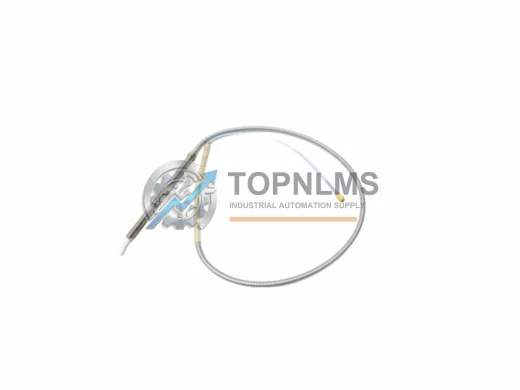
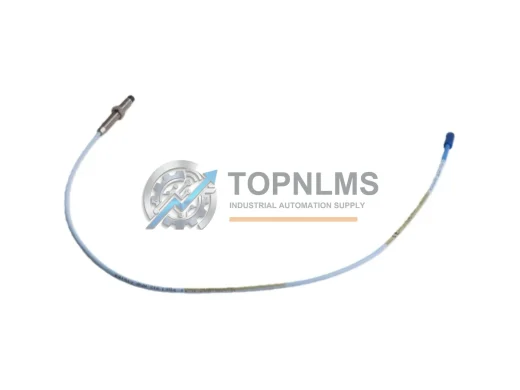
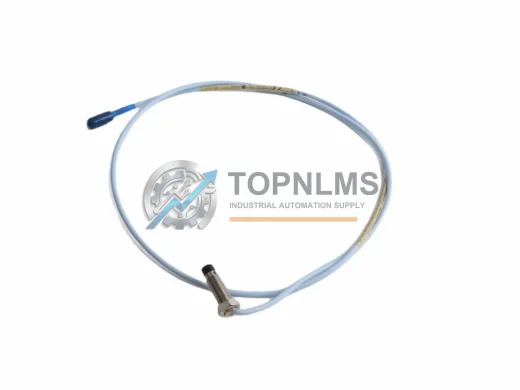
For installations where the sensor cable run exceeds 300 meters, a Bently Nevada 330130 extension cable assembly or equivalent shielded twisted-pair cable with proper drain wire termination at the control room end is recommended to minimize EMI-induced signal noise on the 4–20 mA loop. Finally, if the replacement is part of a broader condition monitoring upgrade that includes adding online oil debris monitoring, the Bently Nevada 3500/64 process variable monitor card can be added to the same 3500 rack without disrupting the existing 330500-02-04 channel assignments.
Retrofit Guidance FAQ
Q: Can I replace the 330500-02-04 without rewiring the field junction box?
A: Yes. The 330500-02-04 uses a standard 2-wire 4–20 mA loop connection. As long as the existing field cable is shielded twisted-pair rated for the loop voltage (18–30 VDC), no rewiring is required. Verify terminal polarity before energizing the loop.
Q: Do I need to reconfigure the 3500/40M monitor card after swapping the sensor?
A: In most cases, no. The 330500-02-04 maintains the same output scaling as earlier 330500 suffix variants. However, if the previous sensor had a different full-scale velocity range due to a custom factory configuration, you should verify the channel full-scale setting in the 3500 rack configuration software (Rack Configuration Utility) before returning the machine to service.
Q: Is the 330500-02-04 compatible with HART communication over the 4–20 mA loop?
A: The 330500-02-04 is a passive 4–20 mA transmitter. It does not natively support HART digital superimposition. If your DCS or asset management system requires HART communication for device identification, a HART-capable replacement from the Bently Nevada 330900 Series should be evaluated instead.
Q: What is the physical installation clearance required?
A: The sensor body dimensions are identical to earlier 330500 suffix variants. No modification to the mounting bracket, sensor guard, or cable conduit entry is required. The IP67 rating of the -04 suffix provides improved protection in wash-down or high-humidity environments compared to IP65-rated predecessors.
Q: Can this sensor be used in a SIL-rated safety loop?
A: The 330500-02-04 is not independently SIL-certified. For safety instrumented system (SIS) applications requiring IEC 61511 compliance, consult the Bently Nevada 3500 system SIL documentation and verify whether the sensor is within the assessed subsystem boundary.
Q: How do I verify the replacement sensor is functioning correctly before closing the machine?
A: Apply a calibrated vibration reference source to the sensor mounting surface and confirm the 4–20 mA output corresponds to the expected velocity value at the 3500/40M channel display. Alternatively, use a handheld loop calibrator to simulate the 4–20 mA signal and verify the rack alarm setpoints are correctly configured before the machine is restarted.
Warranty Assurance
Every Bently Nevada 330500-02-04 unit supplied by TOPNLMS is covered by a 12-month warranty from the date of shipment. Prior to dispatch, each unit undergoes functional verification including loop output linearity check, insulation resistance test, and connector integrity inspection. Units that do not meet specification are quarantined and not shipped.
If a warranty claim arises within the coverage period, TOPNLMS will arrange a replacement unit or issue a full refund at the buyer’s discretion. Our average response time for warranty inquiries is within one business day. Replacement units are dispatched from Xiamen with priority freight to minimize plant downtime.
For procurement teams requiring documentation, we can provide a test report, packing list, and commercial invoice with HS code declaration for customs clearance. Bulk orders for MRO inventory programs are supported with scheduled delivery and consignment stocking arrangements upon request.
Stock is maintained on-hand for immediate dispatch. Standard lead time for in-stock units is 3–7 business days to most international destinations via DHL Express or FedEx International Priority.
For technical pre-sales questions, compatibility verification, or to request a quotation, contact our engineering sales team directly.