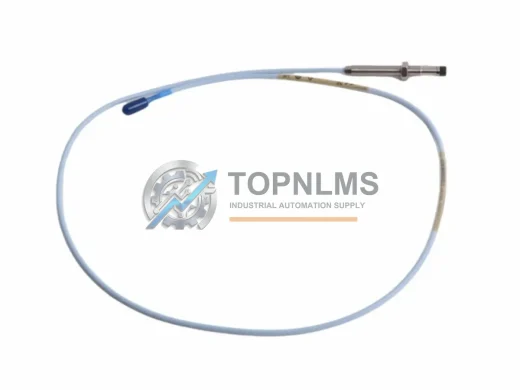
Product Overview
Bently Nevada 21504-000-016-10-02 Original Industrial Spare 3300 XL Compatible: System Stability and Industrial Spare Maintenance Value
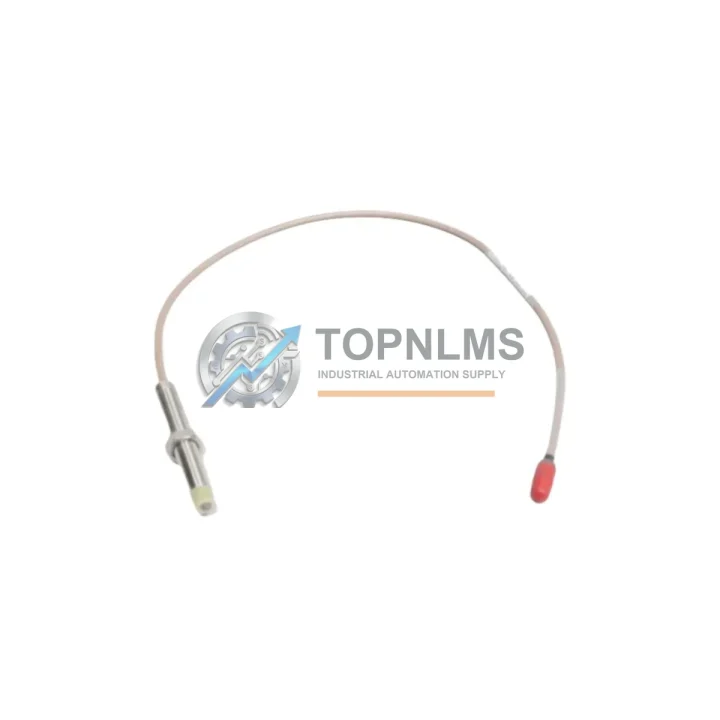
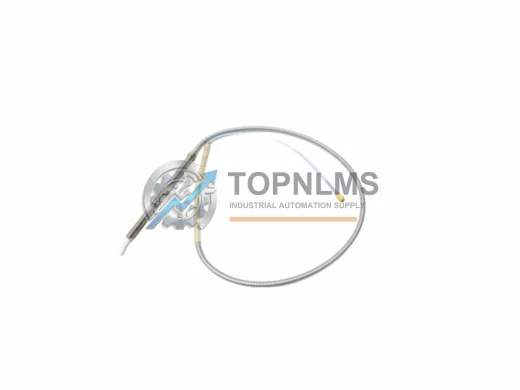
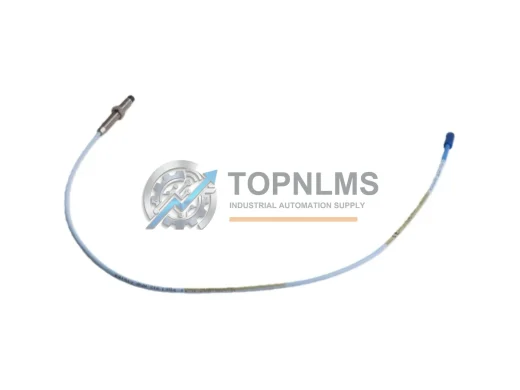
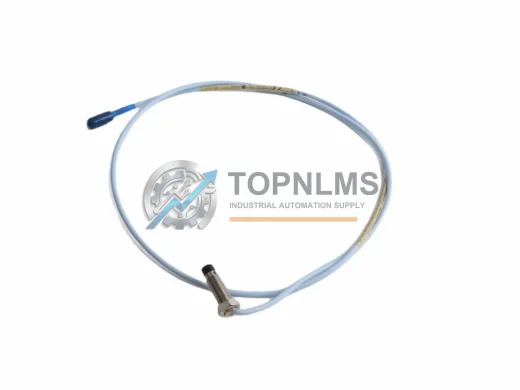
In rotating machinery protection and condition monitoring environments, the Bently Nevada 21504-000-016-10-02 eddy-current proximity sensor is a mission-critical component of the 3300 XL Series monitoring system. Deployed across turbines, compressors, pumps, and gearboxes in oil & gas, power generation, petrochemical, and heavy manufacturing facilities, this sensor provides continuous, non-contact measurement of shaft radial vibration, axial position, and differential expansion — the three parameters most directly linked to catastrophic machinery failure.
When this sensor degrades or fails, the entire protection loop is compromised. Operators lose real-time visibility into shaft dynamics, and the risk of undetected bearing wear, rotor imbalance, or thrust bearing failure increases dramatically. Maintaining a verified, tested spare of the 21504-000-016-10-02 in your critical spares inventory is not optional — it is a fundamental element of any serious predictive maintenance and machinery protection strategy.
Critical Technical Specs Table
| Parameter |
Specification |
| Part Number |
21504-000-016-10-02 |
| Brand |
Bently Nevada |
| Series |
3300 XL |
| Type |
Eddy-Current Proximity Sensor |
| Sensing Technology |
Eddy-Current (Non-Contact) |
| Cable Length |
5 m (16 ft) — per SKU suffix -016 |
| Thread Size |
8 mm (M8) |
| Connector Type |
Integral armored cable with BNC/TNC termination |
| Sensitivity |
7.87 V/mm (200 mV/mil) nominal |
| Measurement Range |
0.25 mm – 2.25 mm (10–90 mil) |
| Operating Temperature |
-35°C to +121°C (-31°F to +250°F) |
| Target Material |
AISI 4140 steel (standard); compatible with most ferrous alloys |
| System Compatibility |
Bently Nevada 3300 XL Series drivers/monitors (e.g., 3300/16, 3300/20, 3300/25) |
| Application |
Radial vibration, axial position, differential expansion, eccentricity |
| Installation |
Threaded mount; requires calibrated gap setting per OEM procedure |
| Origin |
USA (Bently Nevada / Baker Hughes) |
| Warranty |
12 Months from date of shipment |
| Condition |
Original, new or fully tested surplus |
Preventive Maintenance Strategy
Experienced maintenance engineers know that a proximity sensor failure rarely occurs in isolation. The 3300 XL system is an integrated protection architecture — the sensor, extension cable, driver, and monitor form a calibrated measurement chain. When scheduling a planned outage or responding to a vibration alarm, replacing only the failed sensor without inspecting the full signal chain is a common and costly mistake.
During any maintenance window involving the 21504-000-016-10-02, technicians should simultaneously inspect the 3300 XL extension cable (typically the 330130 series) for jacket abrasion, connector corrosion, and continuity. The 3300 XL proximitor/driver (such as the 3300/16-02-01-00 or 3300/20-02-01-00) should be bench-tested for output linearity and bias voltage stability, as driver degradation can produce false vibration readings that mask real mechanical problems.
At the monitor level, the Bently Nevada 3500/42M or 3500/40M vibration monitor cards should be verified for alarm setpoint integrity and channel-to-channel cross-talk. If the control cabinet also houses a 3500/22M transient data interface or a 3500/15 power supply module, these should be included in the inspection checklist — power supply ripple is a known source of spurious vibration alarms in aging 3500 racks.
For facilities running older Bently Nevada 7200 Series or 3300/05 systems alongside the 3300 XL architecture, cross-compatibility of spare sensors should be verified before installation. Maintaining a mixed-series spare inventory without clear labeling is a frequent source of field errors during emergency shutdowns.
Beyond the sensor chain itself, the broader machinery protection cabinet typically contains components that share the same maintenance cycle: relay output modules (such as the 3500/32 or 3500/33) for trip logic, communication gateway modules (3500/92 or 3500/94) for DCS/SCADA integration, and Keyphasor modules (3500/25) for phase reference. Each of these should be included in a comprehensive annual inspection of the protection system. Proactive replacement of aging relay modules and communication cards — before they cause nuisance trips or data dropouts — is far less costly than an unplanned shutdown.
For facilities with high ambient vibration or chemical exposure, inspecting the junction box terminal strips, cable gland seals, and signal isolators in the sensor wiring circuit is equally important. Moisture ingress at terminal connections is a leading cause of intermittent sensor faults that are difficult to diagnose remotely.
Strategic Replacement Solutions
The Bently Nevada 21504-000-016-10-02 is a legacy part number within the 3300 XL product family, which has been in continuous industrial service for decades. Many facilities operating turbomachinery installed in the 1990s and 2000s still rely on this exact sensor configuration. While Bently Nevada (now a Baker Hughes brand) continues to support the 3300 XL platform, lead times for new OEM orders can extend to 8–16 weeks during periods of high demand — a timeline incompatible with emergency maintenance requirements.
Sourcing a verified, tested spare from an authorized industrial distributor eliminates this lead-time risk. Our stock of the 21504-000-016-10-02 is drawn from original manufacturer production runs, stored under controlled conditions, and subjected to functional testing prior to shipment. Each unit is verified for bias voltage output, sensitivity linearity, and cable continuity before dispatch.
For facilities considering a phased migration from the 3300 XL platform to the newer Bently Nevada 3500 Series or System 1 condition monitoring architecture, the 21504-000-016-10-02 provides a cost-effective bridge solution. It maintains full compatibility with existing 3300 XL drivers and monitors, allowing facilities to extend the operational life of their current protection system while capital planning for a full platform upgrade proceeds on a controlled schedule.
Purchasing a minimum of two spare sensors per critical machine train — one for immediate replacement and one for bench calibration reference — is a widely adopted best practice in turbomachinery maintenance programs. This approach eliminates the single-point-of-failure risk in spare parts inventory and ensures that a calibrated reference is always available for field verification during commissioning or post-maintenance testing.
Support FAQ
Q1: Is the 21504-000-016-10-02 compatible with all 3300 XL Series drivers and monitors?
Yes. The 21504-000-016-10-02 is designed for use within the Bently Nevada 3300 XL measurement chain and is compatible with all standard 3300 XL proximitor/driver modules. Compatibility with specific monitor channels (e.g., 3300/16, 3300/20, 3300/25) should be verified against the system’s calibration records, as gap and sensitivity settings are machine-specific. If you are integrating this sensor into a 3500 Series monitor, consult the system documentation for transducer compatibility tables.
Q2: What does the 12-month warranty cover, and what pre-shipment testing is performed?
Every unit is functionally tested for bias voltage output (nominally -10.5 VDC at standard gap), sensitivity (7.87 V/mm ± 10%), and cable/connector continuity before shipment. The 12-month warranty covers manufacturing defects and functional failure under normal operating conditions from the date of shipment. It does not cover damage resulting from incorrect installation, improper gap setting, or exposure to conditions outside the rated operating envelope.
Q3: How should I verify the sensor is functioning correctly after field installation?
After installation and gap setting per OEM procedure (typically 1.0–1.5 mm for standard steel targets), verify the driver output voltage is within the linear range (approximately -7 VDC to -18 VDC). Use a calibrated oscilloscope or the monitor’s built-in diagnostic display to confirm the static gap voltage and check for noise or signal instability. If the output is outside the expected range, inspect the extension cable connections and driver module before concluding the sensor is faulty.
Q4: What is the recommended spare parts inventory strategy for critical rotating machinery?
For any machine classified as critical (i.e., no installed spare and direct impact on production), maintain a minimum of two proximity sensors per measurement plane, one complete extension cable set, and one spare driver module per rack. Review and rotate spare inventory every 24–36 months to prevent storage-related degradation. Sensors stored beyond five years should be functionally tested before deployment, even if unused.