
BENDER
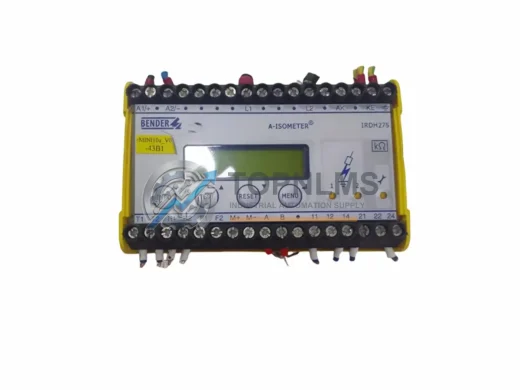
BENDER IRDH275-435 Original Industrial Spare IRDH275 Compatible
IRDH275-435BENDER IRDH275-435 original insulation monitoring relay for IT systems. IRDH275 series compatible. Fast shipping, 12-month warranty. Industrial replacement.
Request availability, condition, lead time and export shipping details for IRDH275-427.
Send this exact part number, quantity and destination country. TOPNLMS will confirm availability, condition and export lead time before quotation.
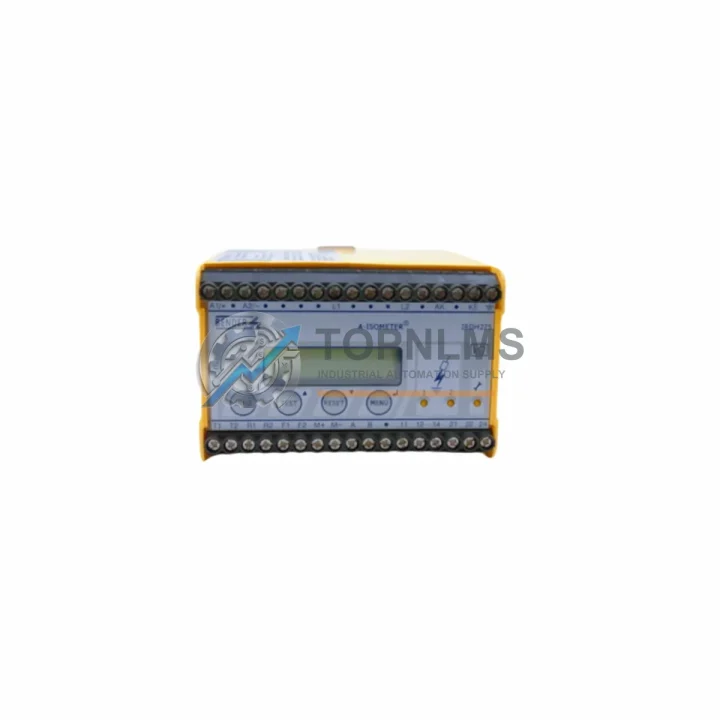
When your existing BENDER IRDH275-427 insulation monitoring device reaches end-of-service or becomes unavailable through standard distribution channels, the continuity of your IT system’s ground-fault protection depends on a verified, drop-in replacement that preserves every critical parameter — measurement range, response threshold, alarm relay logic, and communication interface — without forcing a redesign of your control cabinet or PLC program. This listing provides exactly that: a fully tested BENDER IRDH275-427 unit sourced from authorized supply chains, inspected prior to dispatch, and backed by a 12-month warranty covering both component integrity and functional performance.
The IRDH275-427 belongs to BENDER’s IRDH275 series of insulation monitoring devices engineered specifically for unearthed IT power systems (IEC 61557-8 / IEC 60364-7-710). It continuously monitors the insulation resistance between the active conductors and earth in systems operating at AC voltages up to 690 V and DC voltages up to 1000 V, triggering a pre-alarm and a main alarm relay when resistance drops below the user-configured thresholds. The 427 variant is factory-configured for a nominal system voltage of 220–240 V AC and integrates a built-in test function, a digital display for real-time resistance readout, and a BENDER BMS bus interface for connection to BENDER’s COM465 or EDS series fault locators and monitoring systems.
| Parameter | Legacy / Outgoing Unit | IRDH275-427 (This Unit) | Replacement Notes |
|---|---|---|---|
| Model | BENDER IRDH275 (earlier variants) | BENDER IRDH275-427 | Direct form-factor replacement within IRDH275 series |
| System Type | IT (unearthed) AC/DC | IT (unearthed) AC/DC | No system architecture change required |
| Nominal Voltage | Up to 690 V AC / 1000 V DC | Up to 690 V AC / 1000 V DC | Full voltage range retained |
| Measurement Range | 1 kΩ – 10 MΩ | 1 kΩ – 10 MΩ | Identical — no threshold recalibration needed |
| Alarm Relays | 2 (pre-alarm + main alarm) | 2 (pre-alarm + main alarm) | Wiring to existing relay terminals unchanged |
| Communication Interface | BENDER BMS bus | BENDER BMS bus | Compatible with COM465, EDS440, EDS460 fault locators |
| Mounting | DIN rail / panel mount | DIN rail / panel mount | Same footprint — no cabinet modification |
| Display | Analog / early digital | Digital LCD with real-time Ω readout | Improved readability; no wiring impact |
| Self-Test Function | Manual (some variants) | Built-in automatic self-test | Reduces maintenance intervention |
| Standards Compliance | IEC 61557-8 | IEC 61557-8 / IEC 60364-7-710 | Meets current medical and industrial IT system codes |
| Warranty | Expired / unknown | 12-Month Warranty | Covered from date of shipment |
A successful IRDH275-427 retrofit rarely involves the IMD alone. In most IT system control cabinets, the insulation monitor works in concert with a broader protection and monitoring architecture. During the replacement process, engineers frequently audit and simultaneously upgrade adjacent components to eliminate future single points of failure and to bring the entire panel up to current IEC standards.
The BENDER BMS bus connecting the IRDH275-427 to the rest of the monitoring network typically feeds into a BENDER COM465IP or COM465DP gateway, which aggregates insulation data and fault-location results for transmission to a SCADA or building management system via Modbus TCP, Profibus, or BACnet. If your existing gateway is an older BENDER COM460 or COM165, this replacement cycle is an ideal moment to migrate to the COM465 platform, which supports simultaneous connection of up to 100 BMS bus devices and provides a web-based diagnostic interface without additional software.
Fault localization in larger IT networks is handled by BENDER EDS440 or EDS460 series insulation fault locators. These devices inject a low-frequency test current into the network and identify the faulted branch down to the individual circuit level, dramatically reducing the time technicians spend tracing ground faults in multi-feeder medical or industrial IT systems. When the IRDH275-427 triggers its main alarm relay, the EDS system can be configured to begin an automatic localization sweep, logging the faulted branch ID and timestamp for maintenance records.
On the power supply side of the cabinet, the IRDH275-427 requires a stable 24 V DC auxiliary supply. If the existing BENDER IRDH275 was powered from a dedicated BENDER ISOMETER power rail or a third-party 24 V DIN rail PSU such as a Phoenix Contact QUINT or a PULS PIANO series unit, the same supply can be reused without modification, provided its output current budget accommodates the IRDH275-427’s consumption of approximately 3 W. In installations where the auxiliary supply is marginal, this is a good time to replace it with a current-generation unit offering active power factor correction and extended hold-up time.
Terminal wiring to the IRDH275-427’s L1, L2 (or L+, L−), PE, and BMS bus terminals follows the same layout as earlier IRDH275 variants. Ferrule-terminated conductors in 1.5 mm² or 2.5 mm² cross-section are recommended. If the existing cabinet uses WAGO 221 or Phoenix Contact PTFIX series terminal blocks for the BMS bus daisy-chain, no changes to the terminal block arrangement are required. For installations that previously used screw-type terminals without ferrules, this replacement is an opportunity to retrofit WAGO or Phoenix Contact push-in terminals to improve long-term connection reliability in vibration-prone environments.
In medical IT systems governed by IEC 60364-7-710 — operating theatres, ICUs, imaging suites — the IRDH275-427 is often installed alongside a BENDER MK2430 or MK800 series alarm indicator and test device. The alarm indicator receives the IRDH275-427’s relay output and BMS bus signal, displays the insulation resistance value at the point of care, and provides the mandatory audible and visual alarm required by the standard. If the existing MK-series indicator is an older MK2430 with a non-backlit display, consider upgrading to the MK800 series simultaneously, as both units share the same BMS bus protocol and the same two-wire alarm relay interface.
For industrial IT systems in offshore platforms, chemical plants, or mining installations, the IRDH275-427 may be paired with BENDER RCMS460 series residual current monitoring systems that supervise individual branch circuits for both insulation degradation and leakage current. The RCMS460 communicates over the same BMS bus and can be integrated into the same COM465 gateway, giving the maintenance team a unified view of both insulation resistance and leakage current trends across the entire installation — a significant operational advantage over managing separate monitoring systems.
Finally, if your migration plan includes upgrading the PLC or DCS that processes the IRDH275-427’s alarm relay outputs — for example, replacing a legacy Siemens S5 or S7-300 discrete input module with a current-generation Siemens ET 200SP or S7-1500 I/O module — the relay contact ratings of the IRDH275-427 (250 V AC, 4 A) are fully compatible with standard 24 V DC digital input modules. No interposing relay is required, and the existing alarm logic in the PLC program can be reused without modification, reducing commissioning time and the risk of introducing software errors during the migration.
Q: Can I reuse the existing wiring when replacing an older IRDH275 variant with the IRDH275-427?
A: Yes. The IRDH275-427 uses the same terminal designations (L1, L2/L+/L−, PE, K1, K2, BMS) as earlier IRDH275 series units. Conductor cross-sections of 1.5–2.5 mm² are compatible. Verify ferrule crimping before reconnection.
Q: Do I need to modify my PLC program after replacing the IMD?
A: No. The IRDH275-427’s alarm relay behavior (normally closed / normally open, de-energized on alarm) is identical to earlier IRDH275 variants. Existing PLC discrete input logic for pre-alarm and main alarm signals requires no changes.
Q: Is the BENDER BMS bus interface backward-compatible with older COM460 or COM165 gateways?
A: The IRDH275-427 uses the standard BENDER BMS bus protocol, which is backward-compatible with COM460 and COM165 gateways. However, BENDER recommends migrating to the COM465 platform for full feature support and continued firmware updates.
Q: What is the physical footprint of the IRDH275-427, and will it fit in my existing cabinet cutout?
A: The IRDH275-427 is designed for DIN rail mounting (35 mm TS35) or panel surface mounting using the supplied brackets. Its dimensions are consistent with the IRDH275 series housing. No cabinet cutout modification is required for DIN rail installations.
Q: How do I verify the unit is functioning correctly after installation?
A: Use the built-in self-test function (TEST button) to simulate an insulation fault and confirm that both the pre-alarm and main alarm relays operate correctly and that the BMS bus gateway registers the alarm event. Record the baseline insulation resistance reading displayed on the LCD for future trend comparison.
Q: What communication protocols does the IRDH275-427 support for integration with SCADA or DCS systems?
A: The IRDH275-427 communicates natively over the BENDER BMS bus (two-wire, RS-485 physical layer). Integration with Modbus TCP, Profibus DP, BACnet, or OPC UA requires a BENDER COM465 series gateway, which translates BMS bus data to the target protocol.
Q: Can the IRDH275-427 be used in DC IT systems, such as battery storage or EV charging infrastructure?
A: Yes. The IRDH275-427 supports DC IT systems up to 1000 V DC, making it suitable for battery energy storage systems (BESS), DC microgrids, and EV charging station IT networks where continuous insulation monitoring is required by IEC 61851 or local grid codes.
Every BENDER IRDH275-427 unit dispatched from our Xiamen facility undergoes a pre-shipment functional test that verifies insulation measurement accuracy across the full resistance range (1 kΩ – 10 MΩ), alarm relay operation at both pre-alarm and main alarm thresholds, BMS bus communication handshake, self-test function, and display integrity. Test records are retained and available upon request.
The unit is covered by a 12-month warranty from the date of shipment. During the warranty period, any unit that fails to perform to BENDER’s published specifications under normal operating conditions will be replaced or repaired at no charge, including return freight. Warranty claims are processed within 3 business days of receipt of the returned unit and supporting documentation (installation photos, fault description, test records).
We maintain buffer stock of IRDH275-427 units to support urgent replacement orders. Standard lead time for in-stock units is 3–7 business days to most destinations via DHL Express or FedEx International Priority. Expedited same-day dispatch is available for orders confirmed before 14:00 CST. Export documentation, including commercial invoice, packing list, and certificate of origin, is prepared as standard for all international shipments.
For procurement teams requiring a formal quotation, technical datasheet, or compliance documentation (CE declaration of conformity, RoHS statement), please contact us directly. We support net-30 payment terms for qualified accounts and accept T/T bank transfer, PayPal, and major credit cards.
Contact: [email protected] | +86 18359293191
© 2026 TOPNLMS. All rights reserved. Original Source: https://topnlms.com | Contact: [email protected] | +86 18359293191
BENDER IRDH275-435 original insulation monitoring relay for IT systems. IRDH275 series compatible. Fast shipping, 12-month warranty. Industrial replacement.
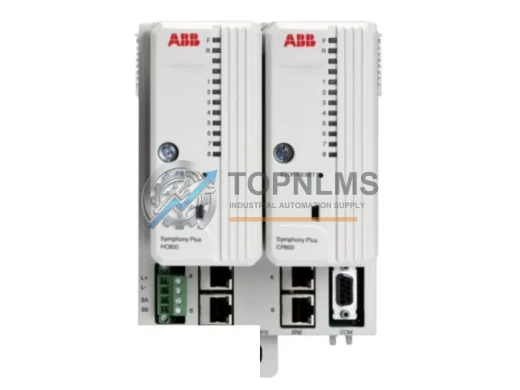
ABB CPM810 original industrial spare for AC800M DCS systems. Fast replacement, 12-month warranty, tested before shipment. Reduce downtime — order now.
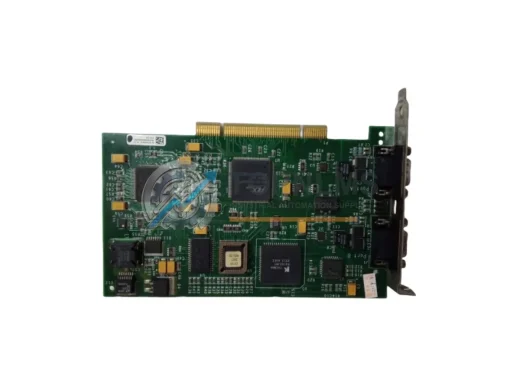
Schneider Electric 416NHM30032A Modicon Quantum PLC memory card. Rugged, reliable industrial automation component. In stock, tested, 12-month warranty. Fast shipping.
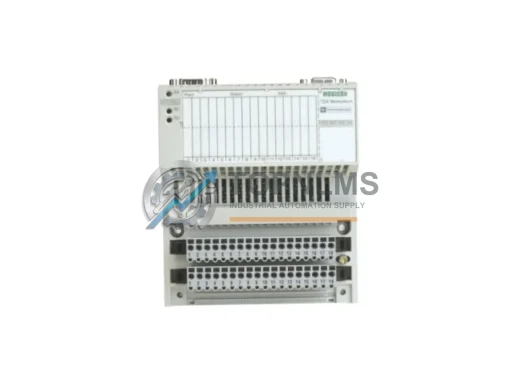
Schneider Electric 170INT11000 original Modicon Momentum Interbus communication adapter. Industrial replacement, 12-month warranty, fast shipping. topnlms.com
Click Quote This Model and the Part Number field will auto-fill with IRDH275-427.