Product Overview
Yokogawa ANB10D-415/CU2T Original Industrial Spare CENTUM VP Compatible: System Stability & Industrial Spare Maintenance Value
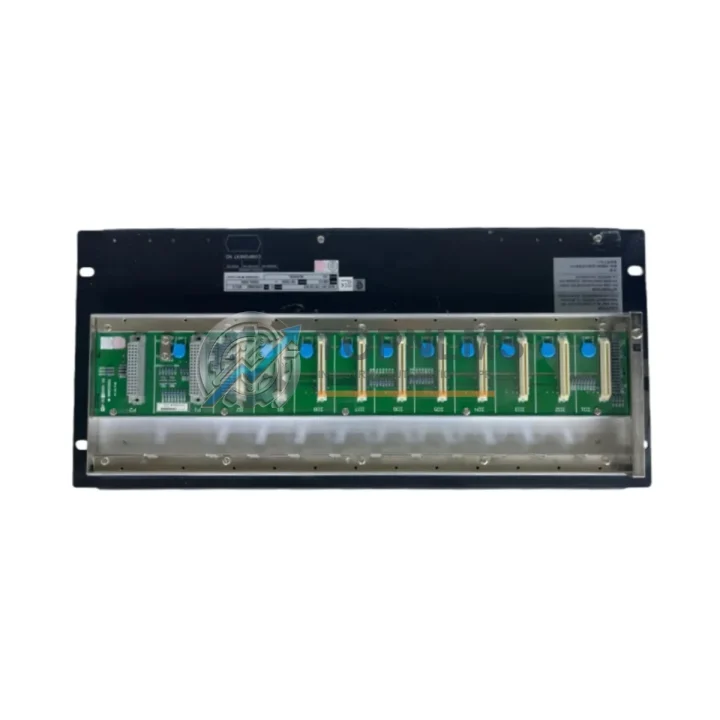
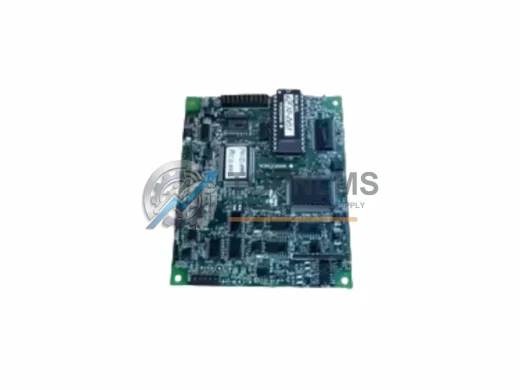
The Yokogawa ANB10D-415/CU2T is an original ESB (Enhanced Signal Bus) Node Unit designed for the CENTUM VP Distributed Control System (DCS) platform — one of the most widely deployed process automation architectures in refining, petrochemical, power generation, and pharmaceutical manufacturing environments. As a critical communication and signal routing node within the CENTUM VP field control network, the ANB10D-415/CU2T governs the integrity of real-time data exchange between field instruments, I/O modules, and the central controller. Maintaining an available spare of this unit is not merely a procurement decision — it is a fundamental pillar of plant uptime strategy.
When this node unit fails or degrades, the consequences extend far beyond a single loop. An ESB node outage can isolate entire I/O clusters, triggering cascading alarms, forcing manual override operations, and — in worst-case scenarios — initiating an unplanned plant shutdown. For facilities operating continuous processes, every hour of unplanned downtime translates directly into lost production, regulatory exposure, and costly emergency procurement at premium prices. Stocking the ANB10D-415/CU2T as a verified, tested original spare eliminates this risk entirely.
Critical Technical Specs Table
| Parameter |
Specification |
| Model / SKU |
ANB10D-415/CU2T |
| Brand |
Yokogawa Electric Corporation |
| Series |
CENTUM VP (CS 3000 Compatible) |
| Module Type |
ESB Node Unit (Enhanced Signal Bus) |
| Product Category |
DCS Node Unit / Field Network Component |
| Communication Bus |
ESB (Enhanced Signal Bus) — high-speed deterministic fieldbus |
| Power Supply |
24 VDC (via backplane / ESB bus power) |
| Operating Temperature |
0°C to 55°C (32°F to 131°F) |
| Storage Temperature |
-25°C to 70°C |
| Humidity |
5% to 95% RH (non-condensing) |
| Mounting |
DIN rail / CENTUM VP node cabinet backplane |
| Country of Origin |
Japan |
| Compatibility |
CENTUM VP R4.x / R5.x / R6.x; CS 3000 legacy migration |
| Application Environment |
Process industries: refining, petrochemical, power, pharma, pulp & paper |
| Maintenance Recommendation |
Inspect every 12–24 months; replace on first sign of communication fault or LED error |
| Warranty |
12 Months — tested and verified before shipment |
Preventive Maintenance Strategy
A disciplined preventive maintenance program for CENTUM VP systems must extend well beyond the ANB10D-415/CU2T node unit itself. During any scheduled shutdown or control cabinet inspection, maintenance engineers should treat the ESB node replacement as the trigger for a comprehensive system health audit. The node unit sits at the intersection of multiple subsystems, and its removal provides the ideal opportunity to inspect and — where necessary — replace adjacent components before they become the next failure point.
Begin with the ESB cable assemblies and connectors that link the ANB10D-415/CU2T to upstream and downstream nodes. Aged or mechanically stressed cables are a leading cause of intermittent communication faults that are frequently misdiagnosed as node unit failures. While the cabinet is open, inspect the power supply modules (such as the Yokogawa PW481 or PW482 series) that feed the node cabinet — voltage ripple or marginal output is a silent killer of communication hardware. Verify that the FCS processor module (typically an AFV10D or AFV30D in CENTUM VP configurations) is operating within normal thermal and load parameters, as a degraded FCS will mask node-level diagnostics.
Simultaneously, audit the I/O modules connected downstream of the ESB node — AAI141, AAI143, or AAB841 analog input/output cards are common in CENTUM VP field cabinets and should be checked for channel drift, blown fuses, or terminal block corrosion. The terminal blocks and wiring harnesses at the I/O module level are frequently overlooked; loose or oxidized terminations introduce signal noise that propagates upstream and can trigger false node alarms. If the installation includes communication modules such as the ALF111 FOUNDATION Fieldbus H1 card or the ALE111 PROFIBUS DP interface, verify their firmware versions and bus termination resistors during the same maintenance window.
For facilities running hybrid architectures, the maintenance window should also cover signal isolators and barriers in the field junction boxes — particularly in hazardous area installations where Zener barriers or galvanic isolators protect the DCS from field-side transients. Finally, inspect the HMI workstation connections and Vnet/IP network switches that carry operator data from the FCS to the CENTUM VP HIS (Human Interface Station) — a degraded network switch can create latency that mimics node-level faults and complicates root-cause analysis.
By treating the ANB10D-415/CU2T replacement as the anchor of a broader cabinet inspection — rather than an isolated swap — maintenance teams can dramatically reduce the probability of a secondary failure within the same maintenance cycle, extending the effective service life of the entire CENTUM VP installation.
Strategic Replacement Solutions
The ANB10D-415/CU2T is a direct replacement for legacy ESB node units used in earlier CENTUM VP and CS 3000 installations. Many plants that commissioned their DCS systems in the early 2000s are now operating hardware that is 15–20 years beyond its original design life. Yokogawa’s CENTUM VP platform was engineered with backward compatibility as a core design principle, meaning the ANB10D-415/CU2T can be installed into existing node cabinet slots without requiring firmware upgrades, re-engineering of I/O assignments, or reconfiguration of the FCS database — a critical advantage when replacement must occur during a narrow maintenance window or an unplanned outage.
For plants managing a phased migration from CS 3000 to CENTUM VP, the ANB10D-415/CU2T serves as a bridge component that preserves existing field wiring, I/O module assignments, and loop configurations while the control strategy is progressively modernized. This approach eliminates the capital expenditure and project risk associated with a full rip-and-replace migration, allowing engineering teams to prioritize the highest-risk loops for modernization while maintaining stable control on legacy sections of the plant.
From a procurement strategy perspective, facilities that stock a minimum of one verified ANB10D-415/CU2T spare — tested, serialized, and stored in ESD-safe packaging — consistently achieve mean-time-to-repair (MTTR) values of under two hours for ESB node failures, compared to industry averages of 24–72 hours when emergency procurement is required. At TOPNLMS, every ANB10D-415/CU2T unit is functionally tested prior to shipment, serialized for traceability, and shipped with full documentation to support your site’s spare parts management system.
Support FAQ
Q1: Is the ANB10D-415/CU2T compatible with both CENTUM VP and CS 3000 systems?
Yes. The ANB10D-415/CU2T is designed for CENTUM VP but maintains backward compatibility with CS 3000 ESB node cabinet configurations. It can be installed as a direct replacement without requiring changes to the FCS engineering database or field wiring, provided the cabinet backplane and power supply specifications are met. We recommend verifying your specific revision level against your system’s hardware compatibility matrix before installation.
Q2: What is the recommended spare parts inventory strategy for this module?
For continuous-process facilities (refining, petrochemical, power generation), we recommend maintaining a minimum of one ANB10D-415/CU2T per active ESB node cluster, with a secondary spare held at the regional warehouse level. Plants with more than four ESB node cabinets should consider a 1:4 spare ratio. Spare units should be stored in ESD-safe packaging, in a climate-controlled environment, and rotated into service on a first-in, first-out basis to prevent long-term storage degradation.
Q3: How is the unit tested and verified before shipment?
Every ANB10D-415/CU2T shipped by TOPNLMS undergoes a multi-point functional test that includes power-on self-test verification, ESB communication handshake simulation, LED status confirmation, and visual inspection for physical damage, corrosion, or counterfeit indicators. Units are serialized, and test records are retained for traceability. A 12-month warranty covers all functional defects identified after installation under normal operating conditions.
Q4: What is the lead time, and can expedited shipping be arranged for emergency breakdowns?
In-stock units are typically dispatched within 1–2 business days of order confirmation. For emergency breakdown situations, expedited air freight options are available to most global destinations. Contact our team directly at [email protected] or +86 18359293191 to confirm current stock availability and arrange priority shipment. We maintain inventory buffers specifically to support unplanned outage scenarios.