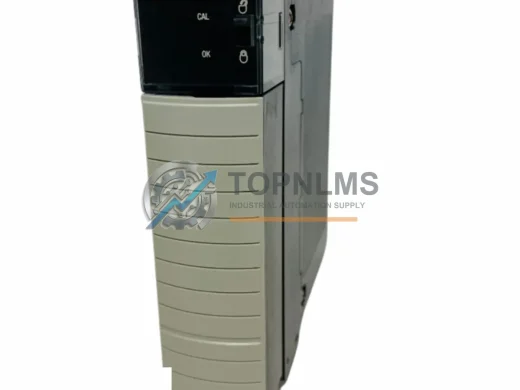
Product Overview
Allen-Bradley 1746-NO4I Original Industrial Spare SLC 500 Compatible: System Stability and Maintenance Value
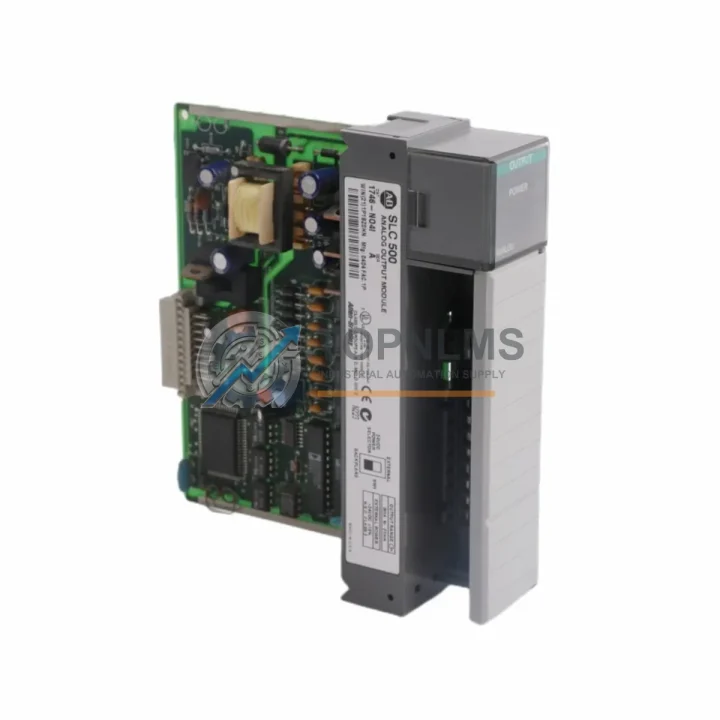
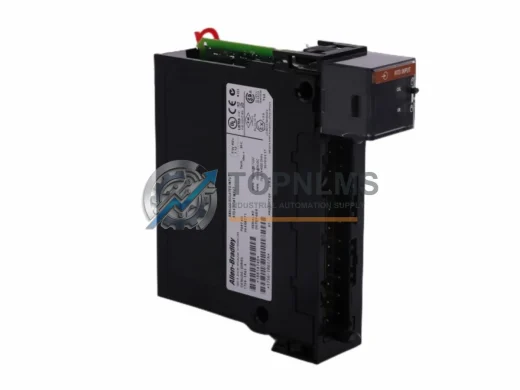
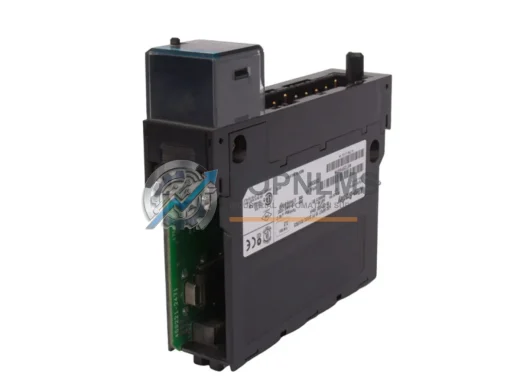
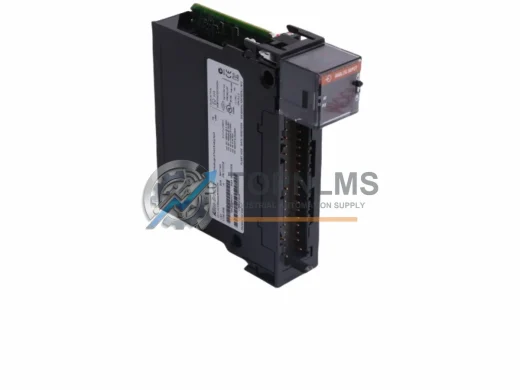
The Allen-Bradley 1746-NO4I is a 4-channel current-sourcing analog output module designed for the SLC 500 programmable controller platform. As an original Rockwell Automation spare part, it delivers the signal accuracy, thermal stability, and long-term reliability that industrial maintenance teams depend on during both scheduled overhauls and emergency shutdowns. Whether you are managing a continuous process line, a batch manufacturing cell, or a legacy control system that must remain operational for years to come, the 1746-NO4I provides a direct, drop-in replacement path that eliminates re-engineering risk and minimizes downtime exposure.
In modern industrial facilities, analog output modules are among the most failure-prone components in a control cabinet. Continuous 4–20 mA loop currents, thermal cycling, vibration, and aging capacitors all contribute to drift and eventual failure. Stocking a verified original 1746-NO4I ensures that when a channel fails mid-shift, your maintenance team can restore full loop control within minutes rather than waiting days for an emergency procurement cycle.
Critical Technical Specs
| Parameter |
Specification |
| Part Number |
1746-NO4I |
| Brand / Manufacturer |
Allen-Bradley / Rockwell Automation |
| Compatible Platform |
SLC 500 (SLC 5/01, 5/02, 5/03, 5/04, 5/05) |
| Output Type |
Current Sourcing (4–20 mA) |
| Number of Channels |
4 Isolated Analog Output Channels |
| Output Resolution |
12-bit (0–4095 counts) |
| Output Range |
4–20 mA (standard); 0–20 mA (configurable) |
| Maximum Load Resistance |
750 Ω per channel |
| Isolation |
Channel-to-backplane isolated |
| Power Consumption |
250 mA @ 5 VDC (backplane); 150 mA @ 24 VDC (field) |
| Operating Temperature |
0 °C to +60 °C |
| Storage Temperature |
-40 °C to +85 °C |
| Relative Humidity |
5–95% non-condensing |
| Backplane Slot Compatibility |
Any SLC 500 I/O chassis slot |
| Country of Origin |
United States |
| Warranty |
12 Months from date of shipment |
Preventive Maintenance Strategy
A proactive maintenance strategy for any SLC 500 control system should treat the 1746-NO4I not as an isolated component but as part of an interconnected analog signal chain. When scheduling a cabinet inspection or a planned shutdown, technicians should simultaneously audit the health of the 1746-NI4 analog input module that feeds process variables into the same control loop — a degraded input module will mask the true performance of a newly replaced output module and lead to misdiagnosis. Equally important is verifying the condition of the 1746-P4 or 1746-P7 power supply module, since voltage sag or ripple on the 5 VDC backplane rail is a leading cause of analog output drift and intermittent channel faults.
Field wiring integrity is another critical factor. The 4–20 mA loops driven by the 1746-NO4I pass through terminal blocks and shielded cables that are subject to corrosion, loose terminations, and insulation breakdown over time. During any replacement event, inspect and if necessary replace the associated 1492-CABLE series wiring harnesses and 1492-IFM interface modules to ensure the new output module operates within its specified load resistance range. Loose or corroded terminations can introduce loop resistance errors that appear as calibration faults.
For facilities running multiple SLC 500 racks, it is good practice to maintain a parallel inventory of the 1746-A4, 1746-A7, or 1746-A13 I/O chassis backplane assemblies. Backplane connector wear is a silent failure mode that is often misattributed to module faults. A spare chassis allows rapid swap-out during a shutdown window without requiring a full system re-wiring. Alongside the chassis, stocking the 1747-L553 or 1747-L551 SLC 5/05 or 5/03 processor modules ensures that a single-point processor failure does not strand an otherwise healthy I/O rack.
Communication health should also be part of the inspection cycle. If the SLC 500 system communicates over a DH+ or DH-485 network, the 1747-SDN DeviceNet Scanner or 1747-KE DH-485/RS-232 interface module should be tested for response latency and error counts. Degraded network modules can cause the processor to lose synchronization with analog output modules, resulting in outputs freezing at last-known values — a dangerous condition in flow or pressure control applications.
Finally, for systems that interface with field instruments such as control valves, variable frequency drives, or positioners, it is advisable to stock a signal isolator or loop calibrator alongside the 1746-NO4I. These tools allow technicians to verify loop integrity and simulate output signals during commissioning of the replacement module, reducing the risk of process upsets during restart.
Strategic Replacement Solutions
The 1746-NO4I has been in service across global manufacturing facilities for decades, and many plants continue to rely on SLC 500 infrastructure that is no longer in active production by Rockwell Automation. Sourcing original, tested spare modules is therefore a strategic priority rather than a routine procurement task. A verified original 1746-NO4I eliminates the firmware compatibility risks associated with third-party equivalents and ensures that the module’s hardware revision matches the processor’s I/O configuration table without requiring a program download or re-commissioning cycle.
For maintenance managers overseeing aging SLC 500 systems, the most cost-effective approach is to establish a minimum stock level of one to two 1746-NO4I modules per production line. This buffer absorbs emergency demand without triggering expedited freight costs or production losses. When a module is pulled from stock for an emergency replacement, the replenishment order should be placed immediately to restore the buffer — a discipline that is far less expensive than a single unplanned shutdown event.
Plants that are planning a long-term migration from SLC 500 to a ControlLogix or CompactLogix platform can use the 1746-NO4I as a bridge component. By maintaining original SLC 500 spare parts during the transition period, engineering teams can defer full migration costs while keeping legacy lines productive. The 1746-NO4I’s direct compatibility with all SLC 500 chassis and processor variants means it can be deployed without any software modification, making it the lowest-risk replacement option available.
All units supplied by TOPNLMS are sourced from verified supply channels, individually tested for output accuracy across all four channels, and shipped with full documentation. Each module is covered by a 12-month warranty from the date of shipment, providing procurement teams with the confidence needed to approve stocking purchases.
Support FAQ
Q1: Is the 1746-NO4I compatible with all SLC 500 processor variants?
Yes. The 1746-NO4I is compatible with all SLC 500 processors including the SLC 5/01, 5/02, 5/03, 5/04, and 5/05. It occupies a single slot in any standard SLC 500 I/O chassis (1746-A4, A7, A10, A13) and is recognized automatically by the processor during power-up without requiring a firmware update.
Q2: What pre-shipment testing is performed on each unit?
Each 1746-NO4I is powered up and tested for output accuracy across all four current-sourcing channels at both 4 mA and 20 mA reference points. Backplane communication integrity and channel isolation are verified before packaging. A test report is available upon request for quality-controlled procurement processes.
Q3: How should I manage spare part inventory for a multi-line SLC 500 facility?
For facilities with three or more SLC 500-controlled lines, we recommend maintaining a minimum of two 1746-NO4I modules in on-site stock. Modules should be stored in anti-static packaging in a climate-controlled environment (0–40 °C, non-condensing). Rotate stock on a first-in, first-out basis and inspect stored modules annually for any signs of connector oxidation.
Q4: What is covered under the 12-month warranty?
The 12-month warranty covers manufacturing defects, channel output failure, and backplane communication faults under normal operating conditions. It does not cover damage resulting from incorrect installation, overvoltage events, or physical impact. Warranty claims are processed within 5 business days of receipt of the returned module, with a replacement unit shipped upon confirmation of the defect.