
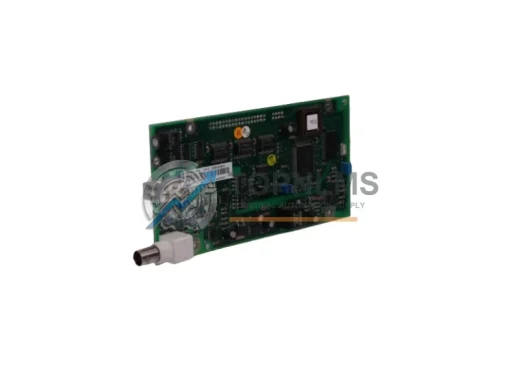
ABB
ABB DSQC327A 3HAC17971-1 Replacement for IRC5
3HAC17971-1ABB DSQC327A (3HAC17971-1) & DSQC431 (3HAC036260-001) Digital I/O replacement for IRC5 Robot Controller. Drop-in upgrade, 12-month warranty, fast DHL/FedEx shipping.
Request availability, condition, lead time and export shipping details for DSBC173 57310001-KH.
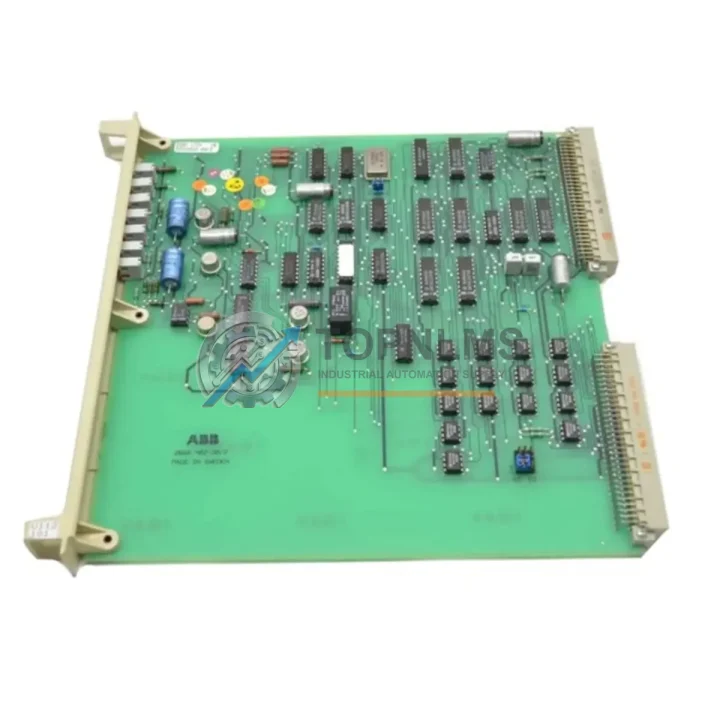
Send this exact part number, quantity and destination country. TOPNLMS will confirm availability, condition and export lead time before quotation.
The ABB DSBC173 (part number 57310001-KH) is an original S100 I/O Bus Extender Module engineered for ABB’s proven S100 distributed control system architecture. In industrial facilities where continuous uptime is non-negotiable — from chemical processing plants and power generation stations to pulp and paper mills and offshore platforms — the DSBC173 serves as a critical backbone component that extends the I/O bus between the central controller and remote I/O racks. Sourced directly from verified supply channels, every unit stocked at TOPNLMS undergoes incoming inspection and functional verification before dispatch, ensuring that the module you receive is ready for immediate installation without the risk of latent defects that can compromise a live production environment.
When a bus extender module fails or degrades, the consequences extend far beyond a single I/O channel. The entire downstream rack of I/O modules — including digital input modules, digital output modules, and analog signal cards — loses communication with the master controller, triggering process shutdowns, safety interlocks, and unplanned downtime. Maintaining a certified original DSBC173 in your on-site spare parts inventory is therefore not a luxury but a fundamental element of any responsible maintenance strategy for ABB S100-based control systems.
| Parameter | Specification |
|---|---|
| Part Number | DSBC173 / 57310001-KH |
| Manufacturer | ABB (ASEA Brown Boveri) |
| Series / Platform | S100 DCS / I/O System |
| Module Function | I/O Bus Extender — extends S100 I/O bus between racks |
| Bus Interface | S100 parallel I/O bus (proprietary ABB backplane protocol) |
| Compatible Controllers | ABB DSPC110, DSPC172, DSPC410 and compatible S100 CPUs |
| Compatible I/O Racks | ABB S100 I/O subrack assemblies (DSBC110, DSBC176 series) |
| Supply Voltage | 24 V DC (from S100 rack power bus) |
| Operating Temperature | 0 °C to +55 °C |
| Storage Temperature | -25 °C to +70 °C |
| Relative Humidity | 5% to 95% non-condensing |
| Country of Origin | Germany |
| Weight (approx.) | 300 g |
| Installation | DIN rail / subrack slot mounting per S100 mechanical standard |
| Certifications | CE marked; compliant with IEC 61131-2 environmental requirements |
| Warranty | 12 Months — covers manufacturing defects and functional failure under normal operating conditions |
A bus extender module replacement is rarely an isolated event. Experienced maintenance engineers know that when a DSBC173 shows signs of bus communication errors — intermittent I/O timeouts, CRC faults logged in the MASTER controller, or unexplained rack dropouts — the root cause often involves a broader set of aging components within the same control cabinet. A thorough preventive maintenance inspection should therefore extend beyond the extender module itself.
Begin by inspecting the S100 rack power supply modules (such as the DSBC110 or DSSR122 power units) that feed the I/O subrack. Degraded capacitors in aging power supplies produce voltage ripple that stresses bus logic circuits and accelerates extender module wear. While the cabinet is open, check the DSDI110A and DSDO110A digital I/O modules seated in the downstream rack — these modules share the same bus that the DSBC173 extends, and a failing I/O module can generate bus contention that mimics extender failure. Similarly, inspect DSAI130A analog input modules for signs of corrosion on the edge connectors, as analog modules are particularly sensitive to bus signal integrity.
The inter-rack bus cables connecting the extender to the remote subrack deserve careful attention. Cracked insulation, loose locking connectors, or cables routed near high-frequency drives can introduce noise that corrupts bus transactions. Replacing the bus cable alongside the DSBC173 is a best practice that eliminates the most common cause of repeat failures. At the same time, verify the condition of the DSBC176 bus coupler at the remote rack end — this companion module works in tandem with the DSBC173 and should be treated as a paired spare.
For facilities running ABB S100 systems integrated with higher-level SCADA or DCS networks, inspect the DSCL110 communication link module and any DSCS140 serial communication modules installed in the same cabinet. Communication modules that share the controller backplane can be affected by bus instability originating from a degraded extender. Proactively stocking these modules alongside the DSBC173 reduces the risk of a secondary failure extending an already costly shutdown.
Finally, review the DSPC172 or DSPC410 CPU module firmware revision and battery status. An S100 CPU with a low memory backup battery may lose configuration data during a power cycle triggered by bus fault recovery, compounding the maintenance event. Keeping a tested spare CPU module and a set of DSMB127 memory backup batteries in your on-site inventory is a low-cost insurance policy against cascading failures during an unplanned outage.
The ABB S100 platform has been in service for decades, and many facilities continue to rely on it because the cost and risk of a full DCS migration outweigh the benefits of modernization in the near term. For these sites, sourcing original replacement modules like the DSBC173 57310001-KH is the most cost-effective strategy to extend system life without compromising process safety or control integrity.
Unlike third-party or refurbished alternatives, an original DSBC173 sourced through TOPNLMS is tested against ABB’s original electrical specifications, ensuring full compatibility with the S100 backplane timing and signal levels. This eliminates the compatibility risk that often accompanies grey-market modules — a risk that can manifest as intermittent bus errors that are extremely difficult to diagnose and may not appear until the system is under full production load.
For maintenance teams managing multiple S100 cabinets across a plant, a strategic approach is to maintain a minimum of one DSBC173 per bus segment as a hot-standby spare. This reduces mean time to repair (MTTR) from hours — the time required to source and expedite a module — to minutes, the time required to swap and re-initialize the rack. Combined with a documented replacement procedure and a pre-tested spare, this strategy directly reduces the financial impact of unplanned downtime, which in process industries can reach tens of thousands of dollars per hour.
TOPNLMS ships the DSBC173 with full functional test documentation, original packaging where available, and a 12-month warranty covering manufacturing defects and operational failure under normal service conditions. Express international shipping options are available for urgent maintenance requirements.
Q1: Is the DSBC173 57310001-KH compatible with all ABB S100 I/O subracks?
A: The DSBC173 is designed for the ABB S100 I/O bus architecture and is compatible with standard S100 subracks and CPU modules including the DSPC110, DSPC172, and DSPC410 series. If you are uncertain about compatibility with a specific rack configuration or firmware revision, please contact our technical team with your system’s CPU part number and rack layout before ordering.
Q2: What pre-shipment testing does TOPNLMS perform on the DSBC173?
A: Each unit undergoes incoming inspection including visual examination for physical damage, connector integrity check, and functional power-on verification. Units that do not pass inspection are quarantined and not offered for sale. Test records are available upon request for quality-critical procurement processes.
Q3: How should I manage spare parts inventory for an aging ABB S100 system?
A: We recommend a tiered inventory strategy: maintain one DSBC173 per active bus segment as a critical-tier spare with a maximum replenishment lead time of 48 hours. For secondary components such as I/O modules and power supplies, a shared pool of 2–3 units per module type is typically sufficient for a mid-sized plant. Annual inventory audits aligned with scheduled shutdowns help identify modules approaching end-of-life before they cause unplanned outages.
Q4: What is covered under the 12-month warranty, and how is a warranty claim processed?
A: The 12-month warranty covers manufacturing defects and functional failure under normal operating conditions as defined by ABB’s original product specifications. It does not cover damage resulting from incorrect installation, overvoltage events, or physical mishandling. To initiate a warranty claim, contact [email protected] with your order number, a description of the failure mode, and any available diagnostic logs. Replacement or repair is processed within 5 business days of receiving the returned unit.
ABB DSQC327A (3HAC17971-1) & DSQC431 (3HAC036260-001) Digital I/O replacement for IRC5 Robot Controller. Drop-in upgrade, 12-month warranty, fast DHL/FedEx shipping.
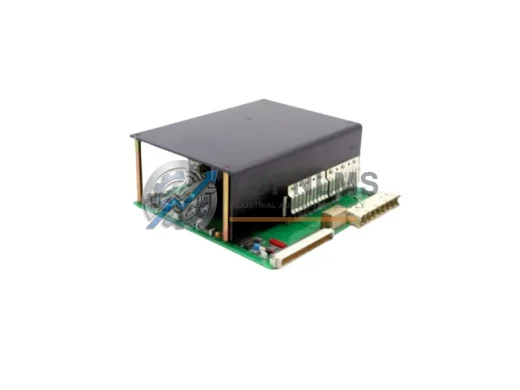
Buy ABB DSQC314B original Digital I/O Board for DSQC Series S4/S4C robot controllers. Genuine industrial spare, tested, 12-month warranty, fast worldwide shipping.
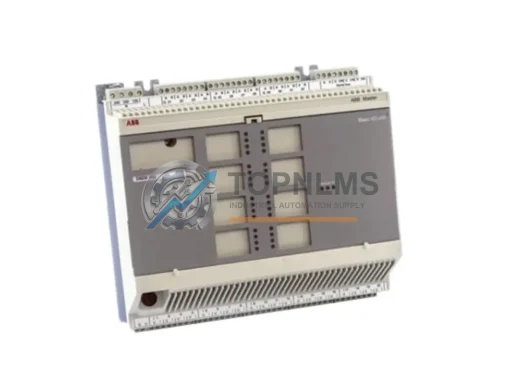
ABB DSDX454 5716075-AT original DCS digital I/O module for Advant Master Series. Fast replacement, 12-month warranty, tested before shipment. Industrial spare.
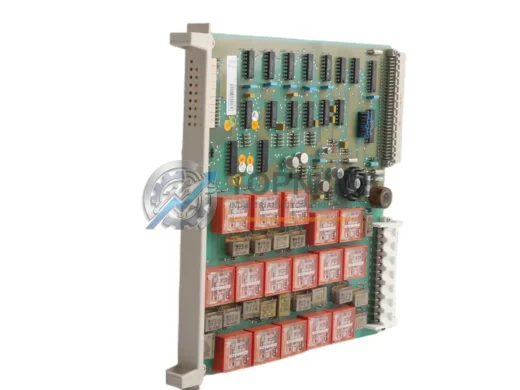
ABB DSDO131 57160001-KX original relay output module for ADVANT MOD 300 DCS. Tested, 12-month warranty, fast worldwide shipping. Industrial spare in stock.
Click Quote This Model and the Part Number field will auto-fill with DSBC173 57310001-KH.