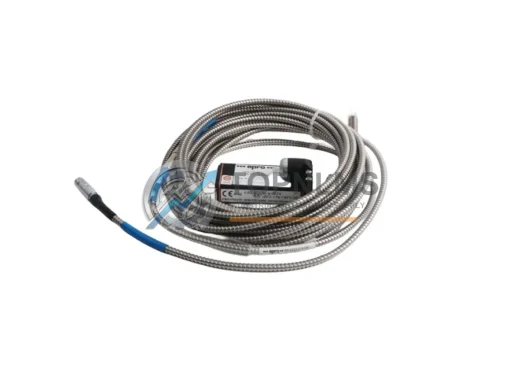
Product Overview
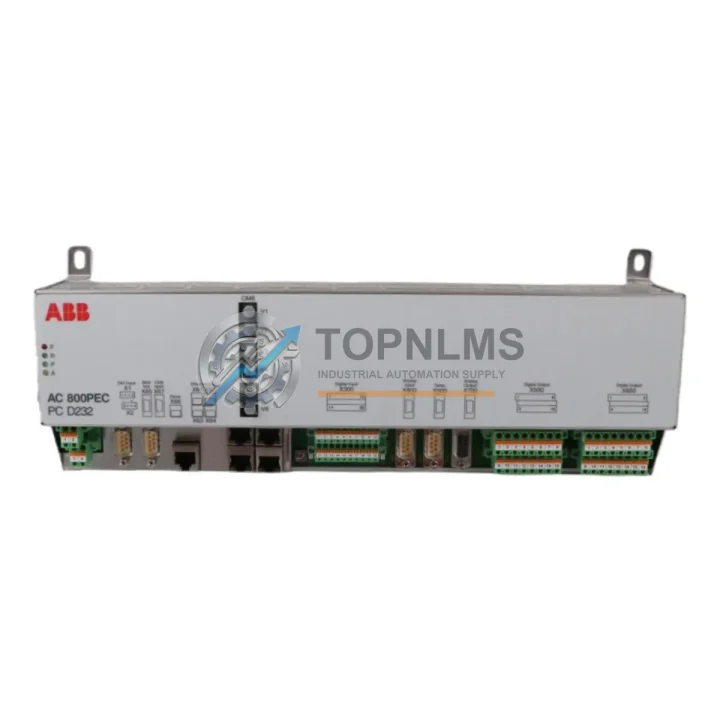
ABB 3BHE022293R0101 PCD232 A106 Symphony Plus Upgrade: Seamless Migration from Legacy DCS Controllers
The ABB 3BHE022293R0101 PCD232 A106 is a high-performance DCS controller module designed for the ABB Symphony Plus platform, serving as a direct replacement and upgrade solution for aging or discontinued controller hardware across a wide range of process automation environments. Whether your facility is running an older Harmony, Infi-90, or early-generation AC800M-based control architecture, this module provides a validated migration path that preserves your existing wiring infrastructure, I/O assignments, and communication topology — dramatically reducing engineering rework and unplanned downtime during the transition.
Industrial plants operating legacy ABB DCS systems frequently encounter the challenge of sourcing discontinued controller modules. The PCD232 A106 addresses this directly: it is form-factor compatible with standard Symphony Plus controller racks, supports the same backplane communication protocols used across the Symphony Plus family, and can be commissioned using ABB’s standard engineering tools without requiring a full system re-architecture. For facilities that have been managing aging spare inventories of obsolete modules, this replacement represents a cost-effective and operationally safe upgrade path.
Compatibility Comparison Table
| Parameter |
Legacy / Replaced Module |
ABB 3BHE022293R0101 PCD232 A106 |
| Platform |
ABB Harmony / Infi-90 / Early Symphony |
ABB Symphony Plus |
| Module Type |
DCS Process Controller |
DCS Controller Module (PCD232 A106) |
| Backplane Interface |
Proprietary Harmony bus / INFI-NET |
Symphony Plus backplane (compatible rack) |
| Communication Protocol |
INFI-NET, Modulebus, RS-485 variants |
Ethernet/IP, PROFIBUS, Modulebus (Symphony Plus) |
| Wiring Compatibility |
Requires terminal block adapter for direct swap |
Standard Symphony Plus terminal wiring |
| Programming Environment |
ABB Master / Control Builder legacy |
ABB Control Builder Plus / Symphony Plus Engineering |
| Physical Form Factor |
Harmony rack module (varies) |
Symphony Plus standard rack slot |
| Power Supply Requirement |
24 VDC (legacy PSU) |
24 VDC (compatible with existing PSU modules) |
| I/O Expansion |
Limited to legacy I/O bus |
Supports S800 I/O modules via Modulebus |
| Replacement Recommendation |
Direct replacement with engineering review |
✔ Validated drop-in for Symphony Plus racks |
| Warranty |
N/A (end-of-life) |
✔ 12-Month Warranty included |
Seamless Upgrade Solutions
A successful migration from a legacy ABB DCS to a Symphony Plus architecture built around the 3BHE022293R0101 PCD232 A106 controller module rarely involves a single component swap. In practice, the upgrade process touches multiple layers of the control system. During commissioning, engineers typically pair this controller with ABB S800 I/O modules — such as the AI810, AO810, DI810, and DO810 series — which connect via the Modulebus interface and allow existing field wiring to be retained with minimal re-termination. The S800 I/O family’s modular design means that individual channel cards can be replaced or expanded without disturbing adjacent loops, a critical advantage in live-plant retrofit scenarios.
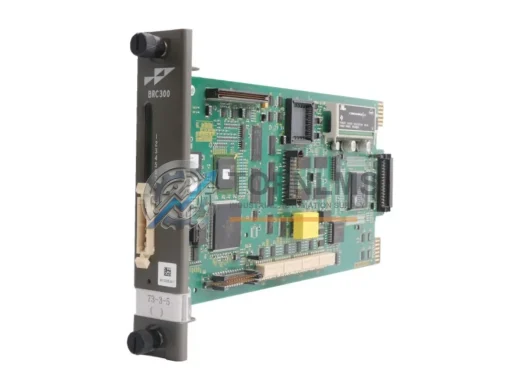
On the communication side, facilities migrating from INFI-NET or legacy Modulebus topologies will often need to introduce an ABB CI854 PROFIBUS DP communication interface module or an ABB CI840 PROFIBUS DP redundant interface to bridge existing field devices — including variable frequency drives, smart transmitters, and remote I/O stations — into the Symphony Plus network. These communication modules slot directly into the same AC800M controller rack as the PCD232 A106, keeping the control cabinet footprint compact and avoiding the need for additional marshalling panels.
Power integrity is another key consideration. The Symphony Plus platform relies on ABB SD802 or SD803 power supply modules to deliver regulated 24 VDC to the controller rack. In many legacy installations, the existing power supply infrastructure is already 24 VDC-based, which means the existing cabinet PSU can often be retained. However, for systems where the original power supply is also approaching end-of-life, replacing it concurrently with the controller module eliminates a common source of nuisance trips during the post-migration stabilization period.
For plants that retain legacy HMI workstations running ABB Operate IT or older Conductor NT interfaces, the migration to a Symphony Plus controller typically requires an upgrade to ABB Ability Symphony Plus Operations or a compatible third-party SCADA system with OPC DA/UA connectivity. In many brownfield projects, engineers opt to deploy an ABB Panel 800 series HMI as an interim operator interface, providing local visualization while the central SCADA migration is completed in phases. This staged approach keeps the process running continuously and avoids the risk of a full cutover outage.
Where the legacy system included dedicated ABB DSQC series robot controllers or motion control nodes integrated into the DCS via hardwired I/O, the PCD232 A106’s expanded I/O capacity and Ethernet connectivity simplify the integration of these subsystems into the unified Symphony Plus architecture. Similarly, facilities using ABB ACS series variable speed drives — such as the ACS580 or ACS880 — can leverage the PROFIBUS or PROFINET interface on the PCD232 A106 to replace legacy hardwired speed references with digital fieldbus control, improving loop performance and enabling remote diagnostics.
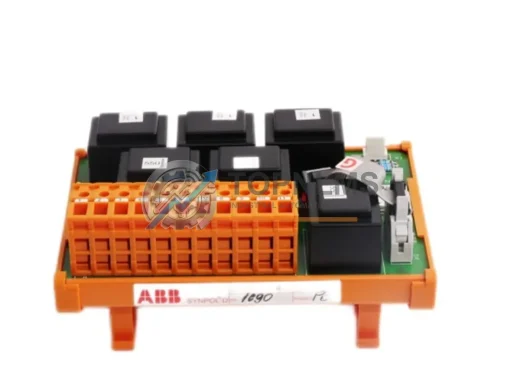
Finally, for sites where the control cabinet layout requires signal conditioning between legacy 4–20 mA transmitters and the new I/O modules, signal isolators and loop-powered barriers (such as those from the ABB HART-compatible range) can be inserted at the marshalling panel without any changes to field wiring. This approach is particularly valuable in hazardous area installations where re-certification of field instruments would otherwise add significant cost and schedule risk to the migration project.
Retrofit Guidance FAQ
Q: Can I reuse my existing field wiring when replacing a legacy Harmony controller with the 3BHE022293R0101?
A: In most cases, yes. The S800 I/O modules that connect to the PCD232 A106 via Modulebus use standard terminal block connections compatible with existing 0.5–2.5 mm² field cables. A wiring audit is recommended to verify shield grounding and cable routing before cutover.
Q: Do I need to rewrite my control application when migrating to Symphony Plus?
A: ABB provides migration tools within Control Builder Plus that can import function block diagrams from legacy Master software projects. While a full automatic conversion is not always possible, the structured migration workflow significantly reduces manual re-engineering effort. Most standard PID, sequence, and interlock logic can be migrated with targeted review rather than full rewrite.
Q: Is the PCD232 A106 compatible with PROFIBUS DP field devices already installed in my plant?
A: Yes, via the CI854 or CI840 PROFIBUS communication interface modules installed in the same rack. The PCD232 A106 controller manages these interfaces natively within the Symphony Plus engineering environment, and existing GSD files for field devices can be imported directly.
Q: How much physical space does the Symphony Plus rack require compared to my existing Harmony cabinet?
A: Symphony Plus racks are available in standard 19-inch DIN rail and rack-mount configurations. In most retrofit projects, the new rack can be installed within the existing control cabinet footprint, particularly when legacy modules are removed and the S800 I/O modules are used in place of older, bulkier I/O cards.
Q: What is the recommended procedure for a live-plant cutover to minimize process disruption?
A: The standard approach is a parallel-run commissioning strategy: the new Symphony Plus controller is configured and tested offline, then installed in the cabinet alongside the legacy system. I/O is transferred loop-by-loop during a planned maintenance window, with the legacy controller remaining available as a fallback until the new system is fully validated. This approach typically reduces cutover risk to a single planned outage of 4–8 hours per controller node.
Q: Can spare modules be tested before installation?
A: Yes. All units supplied by TOPNLMS undergo pre-shipment functional testing on a live Symphony Plus test bench. A test report is available upon request. Modules are shipped with ESD-protective packaging and include a 12-month warranty covering manufacturing defects and functional failures under normal operating conditions.
Warranty Assurance
Every ABB 3BHE022293R0101 PCD232 A106 module supplied by TOPNLMS is backed by a 12-month warranty from the date of shipment. Our quality assurance process includes incoming inspection, functional verification on a Symphony Plus test platform, and outgoing electrical testing prior to dispatch. Modules that fail to perform as specified within the warranty period are replaced or refunded at no additional cost to the buyer.
We maintain stock of the 3BHE022293R0101 in our Xiamen warehouse, enabling same-day or next-business-day dispatch for in-stock orders. International shipments are handled via DHL Express, FedEx International Priority, or sea freight depending on order volume and urgency. Export documentation, including commercial invoices, packing lists, and certificates of origin, is prepared for all international orders to facilitate smooth customs clearance.
For procurement teams managing planned maintenance shutdowns or emergency breakdowns, TOPNLMS offers priority order processing and dedicated after-sales support. Our technical team is available to assist with compatibility verification, installation guidance, and post-commissioning troubleshooting. Contact us before placing your order if you require a compatibility assessment for your specific system configuration.
For volume orders, OEM partnerships, or long-term supply agreements, please contact our sales team directly to discuss pricing, lead times, and consignment stock arrangements.