
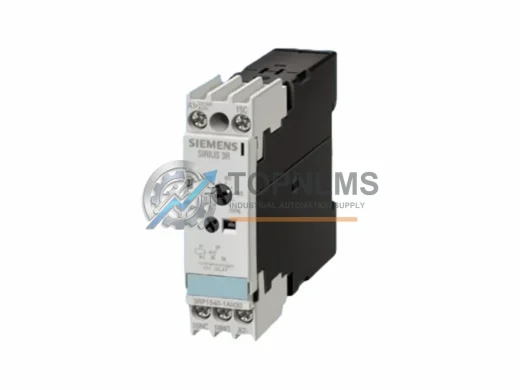
Siemens
Siemens 3RP1540-1BN30 Replacement for SIRIUS Series
3RP1540-1BN30Siemens 3RP1540-1BN30 SIRIUS 8-function time relay replacement. 24–240V AC/DC, drop-in compatible, 12-month warranty. Fast shipping from stock.
Request availability, condition, lead time and export shipping details for A5E33032455.
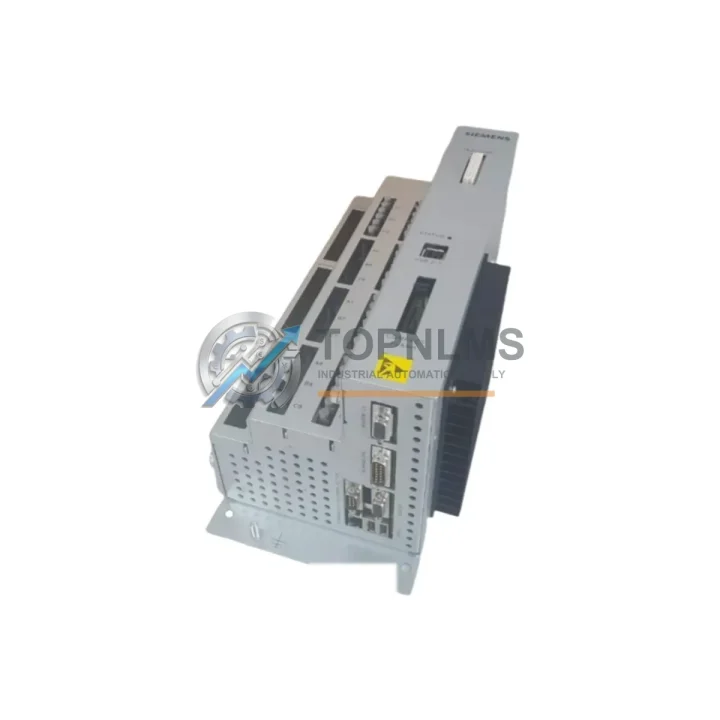
Send this exact part number, quantity and destination country. TOPNLMS will confirm availability, condition and export lead time before quotation.
Upgrading or replacing a legacy Siemens SIMATIC controller in an active production environment demands precision, compatibility assurance, and minimal disruption. The Siemens A5E33032455 is a SIMATIC series controller module engineered to serve as a direct replacement or functional upgrade for aging S7-300 and S7-400 platform components that have reached end-of-life or are no longer supported under current Siemens firmware ecosystems. Whether your facility is migrating from an obsolete CPU module, retiring a discontinued I/O rack, or consolidating a multi-cabinet control architecture, the A5E33032455 provides the electrical, mechanical, and protocol-level compatibility required for a smooth cutover.
This module is particularly well-suited for plants running legacy SIMATIC S7-300 CPUs such as the CPU 315-2 DP or CPU 317-2 PN/DP, where the original controller hardware has become difficult to source or maintain. The A5E33032455 integrates into existing S7-300 rail-mount backplanes without requiring structural modification to the control cabinet, preserving your existing DIN rail layout and terminal wiring. Power supply compatibility with standard PS 307 and PS 305 SIMATIC power supply modules means no additional power infrastructure changes are needed during the retrofit.
From a communications standpoint, the A5E33032455 supports both PROFIBUS DP and PROFINET IO protocols, enabling it to interface directly with existing field devices, distributed I/O stations, and HMI panels without protocol conversion middleware. Plants using ET 200M or ET 200S distributed I/O racks connected via PROFIBUS will find that existing GSD files and hardware configurations in STEP 7 or TIA Portal remain valid, significantly reducing re-commissioning time. For facilities already transitioning toward PROFINET-based architectures, the module supports parallel operation during phased migration, allowing legacy PROFIBUS segments to remain active while new PROFINET nodes are brought online incrementally.
Wiring compatibility is a critical concern in any brownfield retrofit. The A5E33032455 maintains the same front connector pinout standard used across the SIMATIC S7-300 family, meaning existing signal cables, shielded twisted-pair runs, and terminal block assemblies can be reconnected without re-termination. This is especially valuable in installations where cable trays are embedded in concrete or conduit, making rewiring prohibitively expensive. Analog and digital I/O modules such as SM 321, SM 331, and SM 332 signal modules continue to operate on the same backplane bus without firmware changes.
For facilities using CP 343-1 or CP 343-1 Advanced communication processors for Ethernet connectivity, the A5E33032455 slots into the same rack without conflict, preserving existing Industrial Ethernet topology and IP addressing schemes. Similarly, FM 350 and FM 351 function modules for high-speed counting and positioning applications remain fully compatible on the shared S7-300 backplane.
Software migration is streamlined through TIA Portal’s hardware migration wizard, which recognizes the A5E33032455 hardware configuration and maps existing STEP 7 program blocks, data blocks, and organization blocks to the new module’s memory structure. Customers migrating from STEP 7 Classic (v5.x) to TIA Portal V16 or V17 will find that the A5E33032455 is fully supported in the hardware catalog, eliminating the need for manual GSD re-entry or hardware reconfiguration from scratch.
Physical installation follows standard SIMATIC S7-300 mounting procedures: snap onto 35mm DIN rail, connect the bus connector from the adjacent module, and secure the front connector. The module’s compact form factor fits within standard 19-inch control cabinet bays and does not require additional ventilation clearance beyond standard SIMATIC spacing guidelines. For multi-rack configurations using IM 360/IM 361 interface modules, the A5E33032455 operates correctly as a central rack CPU without modification to the expansion rack wiring.
| Parameter | Legacy / Replaced Model | A5E33032455 (This Module) |
|---|---|---|
| Platform | SIMATIC S7-300 / S7-400 (legacy CPU) | SIMATIC S7-300 compatible |
| Mounting | 35mm DIN rail, S7-300 backplane | 35mm DIN rail, S7-300 backplane (identical) |
| Communication Protocol | PROFIBUS DP | PROFIBUS DP + PROFINET IO |
| Front Connector Pinout | Standard S7-300 20-pin | Standard S7-300 20-pin (compatible) |
| Power Supply Compatibility | PS 307 / PS 305 | PS 307 / PS 305 (no change required) |
| Programming Software | STEP 7 Classic v5.x | TIA Portal V16/V17 + STEP 7 (migration supported) |
| I/O Module Compatibility | SM 321, SM 331, SM 332 | SM 321, SM 331, SM 332 (fully compatible) |
| Expansion Interface | IM 360 / IM 361 | IM 360 / IM 361 (compatible) |
| Replacement Type | Direct drop-in / functional upgrade | Drop-in replacement with protocol upgrade |
| Warranty | N/A (discontinued) | 12-Month Warranty (TOPNLMS) |
A complete migration from a legacy SIMATIC S7-300 system to a modernized architecture typically involves more than a single CPU swap. During the retrofit process, engineers commonly address the condition and compatibility of adjacent components to ensure system-wide reliability. The PS 307 10A power supply module is frequently evaluated alongside the CPU replacement, as aging power supplies in long-running installations may exhibit voltage drift that affects module initialization. Similarly, the IM 360 central rack interface module and IM 361 expansion rack interface module are inspected to confirm bus connector integrity before the new CPU is commissioned.
Distributed I/O stations connected via PROFIBUS — particularly ET 200M racks populated with SM 321 digital input modules and SM 332 analog output modules — are verified for GSD file compatibility with the replacement CPU’s hardware configuration. In facilities where the HMI layer consists of SIMATIC TP700 Comfort or TP900 Comfort panels communicating via PROFINET, the panel project files are updated in TIA Portal to reference the new CPU’s IP address and device name, a process that typically requires less than one hour of engineering time.
For installations where the legacy system included a CP 343-1 Lean communication processor for S7 communication over Industrial Ethernet, the existing CP module is retained in the rack and its configuration is imported directly into the TIA Portal project. Customers upgrading control cabinets that include SINAMICS G120 or SINAMICS S120 drive systems connected via PROFIBUS will find that the A5E33032455’s PROFIBUS master interface maintains the existing drive parameter channel without requiring drive re-parameterization, preserving motor ramp profiles, PID tuning, and safety function configurations.
Q: Can I reuse my existing PROFIBUS cable and connectors?
A: Yes. The A5E33032455 uses the standard PROFIBUS DB9 interface. Existing Siemens PROFIBUS connectors (e.g., 6ES7972-0BA52-0XA0) and shielded cable runs are fully reusable without re-termination.
Q: Do I need to rewrite my STEP 7 program?
A: No full rewrite is required. TIA Portal’s migration tool converts existing STEP 7 Classic projects, preserving OBs, FBs, FCs, and DBs. Minor adjustments may be needed for hardware-specific instructions tied to the old CPU type.
Q: Is the front connector from my old module compatible?
A: Yes. The standard 20-pin SIMATIC S7-300 front connector is mechanically and electrically compatible. Existing wiring can be transferred directly to the new module’s front connector.
Q: What happens to my PROFINET configuration if I replace only the CPU?
A: The PROFINET device name and IP address are stored in the CPU. After replacement, use TIA Portal or a PRONETA scan to reassign the device name to the new CPU before going online.
Q: Will the module fit in my existing control cabinet without modification?
A: Yes. The A5E33032455 conforms to standard SIMATIC S7-300 physical dimensions. No cabinet cutouts, additional ventilation, or DIN rail modifications are required.
Q: How do I handle the transition period to avoid production downtime?
A: We recommend pre-staging the replacement module with a loaded and tested program offline before the scheduled maintenance window. A typical hot-swap cutover on a prepared system takes 15–30 minutes.
Every Siemens A5E33032455 module shipped by TOPNLMS is covered by a 12-month warranty from the date of delivery. Prior to shipment, each unit undergoes functional verification including power-on testing, communication port integrity checks, and visual inspection for physical defects. Modules are shipped in anti-static packaging with appropriate cushioning to prevent transit damage.
In the event of a confirmed defect within the warranty period, TOPNLMS provides replacement dispatch within 3 business days upon receipt and inspection of the returned unit. Our technical support team is available to assist with installation questions, compatibility verification, and commissioning guidance throughout the warranty period and beyond.
For B2B procurement teams managing spare parts inventory for critical production lines, we offer batch testing documentation and serialized shipment records upon request. Lead times for standard stock items are typically 3–7 business days for international shipments, with expedited options available for urgent replacement scenarios.
All modules are sourced through verified supply channels and are represented as tested functional units. TOPNLMS does not misrepresent product condition or origin. Buyers are encouraged to request pre-shipment inspection reports for high-value orders.
Siemens 3RP1540-1BN30 SIRIUS 8-function time relay replacement. 24–240V AC/DC, drop-in compatible, 12-month warranty. Fast shipping from stock.
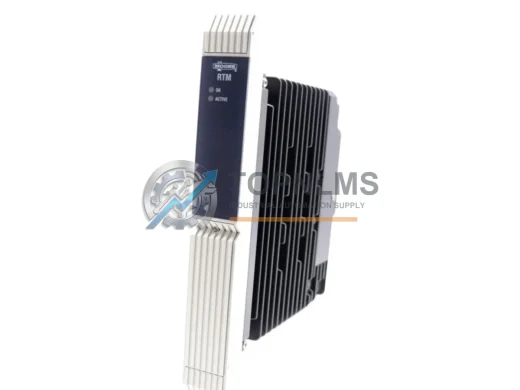
Siemens 39RTMCAN 16207-61/13 ruggedized RTM resistance temperature module for TELEPERM XS/XP DCS. Tested, 12-month warranty, fast global shipping.
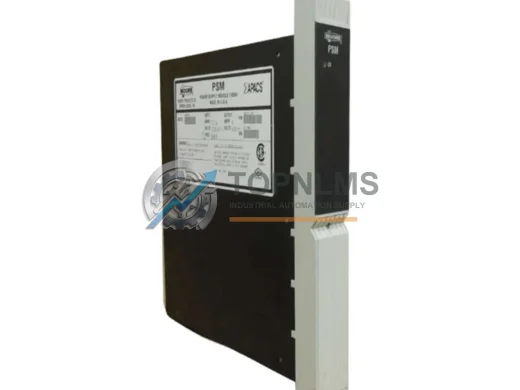
Siemens 39PSMNAN original industrial spare signal processing module. SIMATIC-compatible, fast replacement, 12-month warranty. Reduce downtime — order now.
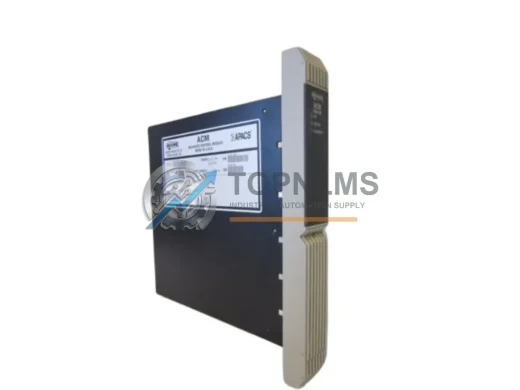
SIEMENS 39ACM24BEN 16139-215/1 ACM+ ruggedized control module. Harsh-environment rated, 12-month warranty, tested stock. Fast shipping from TOPNLMS.
Click Quote This Model and the Part Number field will auto-fill with A5E33032455.