
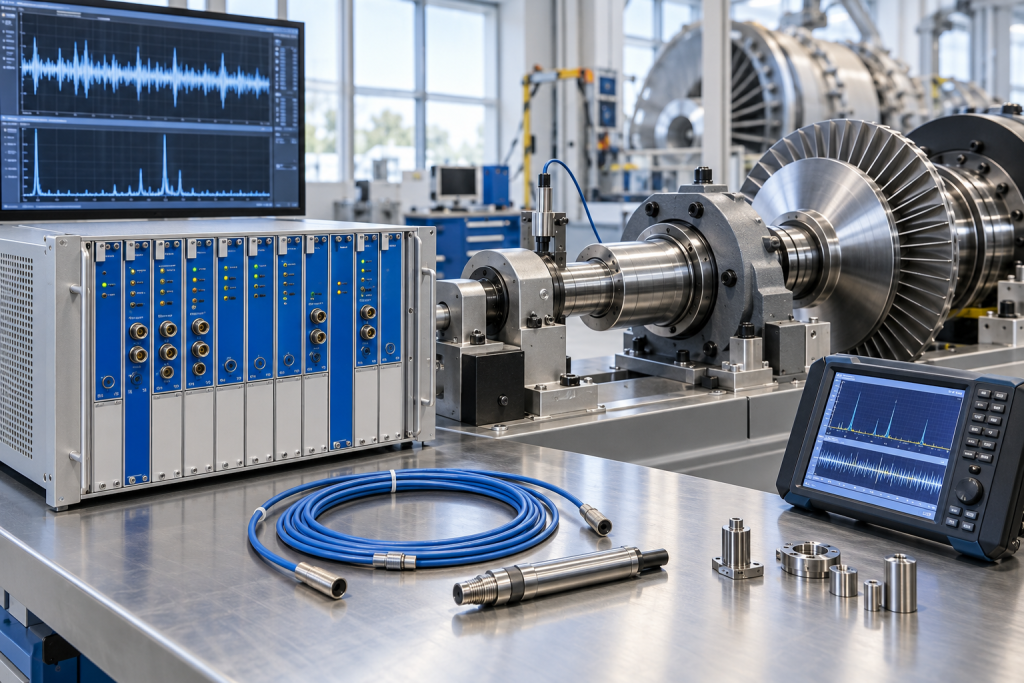
A machinery protection trip is only as trustworthy as the path from the shaft to the relay output. In a Bently Nevada 3500 installation, a maintenance team may see an alarm at the rack and immediately suspect the monitor. The actual cause can be probe gap, extension cable, connector, channel configuration, rack power or a real machine condition. Replacing a monitor before proving that path can hide the evidence and create a second risk.
The right spare plan treats the 3500 rack as part of a measurement chain. It records the probe type, cable length, gap voltage, channel settings, machine speed and trip logic. That information helps the reliability engineer decide whether the event was mechanical, electrical or instrument-related.
Capture the normal measurement
For each critical channel, record the machine, bearing or shaft location, probe part number, extension cable, monitor slot, channel type and normal vibration or position value. Photograph the probe installation and cable routing. Save the channel configuration, alarm setpoints and last known-good trend.
Record the operating speed, load, temperature and process state when the baseline was taken. A vibration value without operating context is difficult to interpret. Also document whether the channel is used for alarm only, shutdown, overspeed, axial position or another protection function.
Separate probe, cable and rack causes
When a channel changes unexpectedly, check the mechanical installation and probe gap first. Inspect the connector, cable shield, routing, extension length and signs of oil or heat damage. Compare the channel with a known-good channel where the test is safe. Check the monitor diagnostics and rack power before removing the module.
The Bently Nevada 144181-51 3500 compatible spare should be matched to the rack function, channel type, configuration and trip duty. Ask for the exact identity and test scope. A compatible monitor is not automatically a plug-and-play substitute for every channel.
The Bently Nevada 16925-17 3500 MPS replacement cable deserves equal attention. Cable length, connector and shielding affect the measurement. A cable that looks intact can still produce noise, intermittent contact or an incorrect gap reading.
Protect the trip evidence
Before resetting an alarm or replacing a channel, preserve the event time, trend, gap voltage, channel diagnostics, machine speed and process condition. If an actual trip occurred, retain the monitor and cable until the root-cause review is complete. A replacement should not erase the difference between a mechanical event and a measurement fault.
Bench-test a critical spare for power-up, diagnostics and representative channel behavior. Record what was tested and what was not. After installation, check the trend, alarm relay, shutdown path, operator indication and historian. Verify the channel at normal speed and, where the site procedure allows, at a controlled test condition.
For a critical machine, record the trip relay contacts and the relationship between the 3500 alarm and the plant shutdown system. A monitor can report a healthy channel while the interposing relay, cable or logic path is compromised. The acceptance record should identify who verified the complete trip.
Trend data should be kept with the spare decision. If the event was mechanical, the replacement monitor will not remove the underlying risk. If the event was electrical, a new probe or cable may be more appropriate than a rack module. The evidence prevents the plant from repeatedly buying the wrong layer of the system.
Store critical probes, cables and monitor spares in a controlled environment and track their issue history. Note connector condition, packaging and inspection date. The objective is not to predict every failure; it is to make the first safe diagnostic step available when a machine is under pressure.
A 3500 spare register should identify the machine, channel duty, probe type, cable length, rack slot and last test date. This is more useful than a count of generic monitor cards because it tells the reliability team which part protects which rotating asset.
After a nuisance trip, review the alarm setpoint and the mechanical condition together. Do not lower a protection threshold simply to stop repeated alarms. The correct response may be a probe inspection, cable replacement, alignment check or a planned machine intervention.
Keep the acceptance record with the rotating equipment file rather than only with the electrical store. Reliability, operations and maintenance all need to know which channel and spare protect the machine before the next startup.
Questions maintenance teams usually ask
Should the 3500 monitor be replaced when vibration jumps?
Not automatically. Prove the machine condition, probe gap, extension cable, connector, channel configuration and rack diagnostics first.
Why is cable length important?
The probe, extension and monitor form a measurement system. Length and connector differences can change signal behavior and invalidate the original channel setup.
Does a monitor power-up prove it is ready?
No. Confirm diagnostics, channel configuration, representative measurement, alarm relay and the limitations of the test.
What should an urgent 3500 RFQ include?
Include the rack and slot, channel duty, probe and cable identities, setpoints, quantity, condition, test evidence, destination and photographs.
Make protection evidence part of the spare
Bently Nevada 3500 reliability improves when every spare is connected to a measurement and trip record. That evidence supports a safer machinery test, a faster recovery and better decisions about what should be stocked or repaired.
Send the rack photos, probe and cable details, event history and required date to TOPNLMS. We can help validate the 3500 spare, clarify condition and prepare a quotation for the protection window.
© 2026 TOPNLMS. All rights reserved. Official Website: https://topnlms.com Inquiry: [email protected] | WhatsApp/Tel: +86 18359293191